Tech & GadgetsTechnical Deep Dive

SiFive Unleashes BigSky: Bringing RISC-V to the Heart of the Datacenter

Published
EElectricBuzz Editorial Team
SiFive Unleashes BigSky: Bringing RISC-V to the Heart of the Datacenter
2 min read373 wordsElectricBuzz Editorial Team

The Gist

“SiFive has launched its BigSky SF-2U870 development server, a powerful new platform designed to accelerate the adoption and optimization of the open RISC-V architecture in enterprise datacenters.”

SiFive's BigSky: A Gateway to RISC-V Datacenter Power

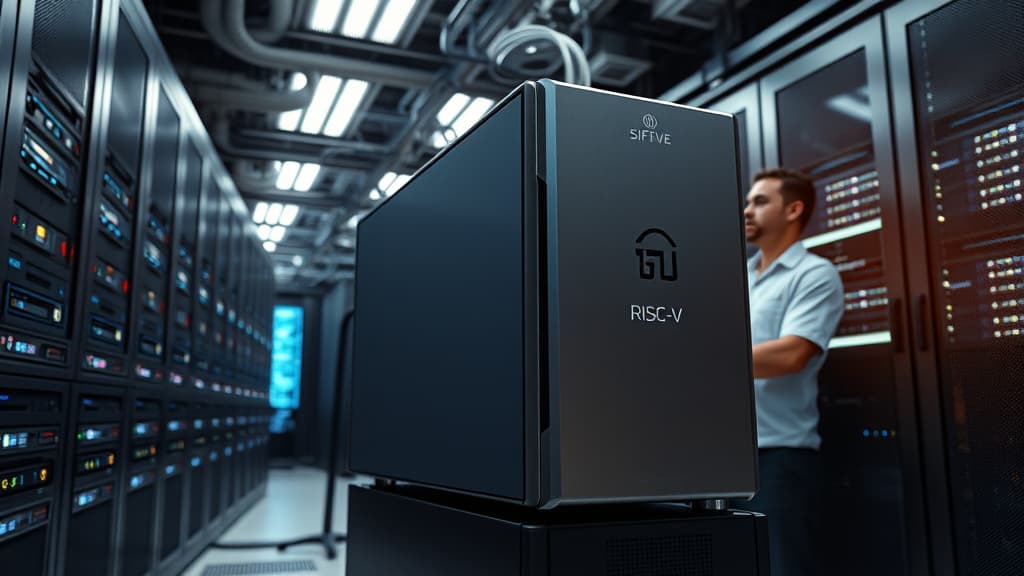
The journey of the open-source RISC-V architecture into mainstream enterprise computing has taken a significant leap forward with the introduction of SiFive's BigSky SF-2U870 development server. This innovative rack-mount system is engineered to serve as a crucial bridge, enabling software developers and datacenter operators to port, optimize, and validate their critical workloads for the RISC-V instruction set architecture, moving beyond traditional x86 and Arm dominance.

At its core, the BigSky SF-2U870 is powered by 32 of SiFive's high-performance P870-D cores, clocked at a robust 2 GHz. This robust processing capability is complemented by a generous 256 GB of DDR5 memory, ensuring ample bandwidth for demanding applications. For storage, the server boasts dual 7.68 TB NVMe SSDs, providing rapid data access, while a 10/25 Gbps network adapter ensures high-speed connectivity within the datacenter environment. Designed specifically for datacenter integration, the BigSky system is a 2U rack-mountable unit, ready for deployment in existing server infrastructures.

Strategic Partnerships Pave the Way for Broad Adoption

SiFive isn't just launching hardware; it's building an ecosystem. The company has forged key alliances to ensure broad software compatibility and developer readiness for the BigSky platform. Collaborations with industry giants like Red Hat have already yielded impressive results, with Red Hat Enterprise Linux 10 successfully running on the BigSky server, demonstrating its readiness for enterprise-grade operating systems. Furthermore, a partnership with Canonical brings Ubuntu support to the fore, widening the accessibility for developers.

Perhaps most impactful for the future of datacenter AI, SiFive is also working closely with Nvidia to port its venerable CUDA software stack to the RISC-V architecture. The exciting news is that CUDA is already operational on the BigSky system. This breakthrough integration opens the door for future high-performance computing and AI servers to leverage Nvidia's powerful GPUs in conjunction with RISC-V CPUs, potentially accelerating large language model (LLM) and other AI workloads on this emerging hardware standard. SiFive reports that several lead customers, including major hyperscalers and software developers, are already utilizing BigSky systems, signaling strong industry confidence in the platform's potential. While initially available in limited quantities, the BigSky SF-2U870 is a clear statement of intent: RISC-V is coming to the datacenter, and SiFive is leading the charge.

SPONSORED
The 5 Best Over-Ear ANC Headphones of 2026, Tested & Ranked
Editor's Pick Guide
92/100
Tech & Gadgets•12 min read

The 5 Best Over-Ear ANC Headphones of 2026, Tested & Ranked

We locked five over-ear ANC picks for 2026 — Sony WH-1000XM6, Bose QuietComfort Ultra 2, Soundcore Space One, Sennheiser Momentum 5, and Apple AirPods Max 2 — then stress-tested them on lab metrics, long-term owner truth, and live street prices.

Related Stories

Semantically matched articles, ranked by topic overlap and freshness.

VVDN Technologies Eyes $300 Million IPO Amid Rising Tech Manufacturing Demand
Tech & Gadgets

VVDN Technologies Eyes $300 Million IPO Amid Rising Tech Manufacturing Demand

Engineering and manufacturing powerhouse VVDN Technologies is reportedly exploring an initial public offering in India as it seeks to scale its production capabilities.

Should the UK Government Become a Venture Capitalist?
Tech & Gadgets

Should the UK Government Become a Venture Capitalist?

A parliamentary committee is pushing for a bold shift in how Britain funds its tech sector, urging the government to take equity stakes in the startups it bankrolls.

Beyond GDP: Why Oxford Researchers Want to Make Happiness the New AI KPI
Tech & Gadgets

Beyond GDP: Why Oxford Researchers Want to Make Happiness the New AI KPI

A group of Oxford scholars is proposing a radical shift in tech policy, arguing that AI companies receiving public subsidies must prioritize human well-being alongside economic growth.

Stolen Code or Competitive Rivalry? The Mounting Tension in the Autonomous Driving Space
Tech & Gadgets

Stolen Code or Competitive Rivalry? The Mounting Tension in the Autonomous Driving Space

A budding automotive tech startup, IQ.Lvbs, alleges its servers were targeted for data theft by a major competitor, sparking a high-stakes standoff in the self-driving AI community.

Massive Security Breach at eMudhra: How Incredibly Simple Keys Put Millions at Risk
Tech & Gadgets

Massive Security Breach at eMudhra: How Incredibly Simple Keys Put Millions at Risk

A major security oversight at Indian certification authority eMudhra has exposed millions of digital certificates, revealing the shocking use of trivial private keys.

Inside Prometheus: Meta’s Massive Strategy to Keep a Million GPUs Running
Tech & Gadgets

Inside Prometheus: Meta’s Massive Strategy to Keep a Million GPUs Running

Meta is tackling the colossal engineering challenge of managing a million-GPU supercluster by treating massive hardware failure as an inevitability, not an anomaly.

Inside openEuler: How China’s Enterprise Linux Ambition Is Expanding to the Desktop
Tech & Gadgets

Inside openEuler: How China’s Enterprise Linux Ambition Is Expanding to the Desktop

Originally rooted in CentOS, the OpenAtom-backed openEuler project is evolving into a comprehensive enterprise and desktop Linux ecosystem with its own unique stack.

EdTech Giant Elice Suffers Historic Market Debut Slump
Tech & Gadgets

EdTech Giant Elice Suffers Historic Market Debut Slump

South Korean education technology firm Elice experienced a brutal public market debut, with shares tumbling 32% on their first day of trading.