Bridging the Architecture Divide
The landscape of Natural Language Processing has been dominated by Transformer-based models since their inception in 2017. While these models effectively solved the vanishing gradient issues that plagued early Recurrent Neural Networks (RNNs), they introduced their own set of challenges, specifically concerning memory consumption and computational overhead as sequence lengths grow. Enter RWKV: a novel architecture that promises the best of both worlds by functioning as a high-performance, linearized model that effectively marries the strengths of RNNs with the powerful scaling of Transformers.
Led by Bo Peng and supported by a robust community, the RWKV project seeks to redefine how we process sequences. By moving away from the memory-heavy attention mechanisms used in standard Transformers while retaining the ability to process long-range dependencies, RWKV stands as a significant leap forward. It is not just a theoretical model; it is already integrated into the Hugging Face transformers library, making it accessible for developers and researchers alike.
The Core Innovation: How RWKV Works
At its heart, RWKV is an "Attention Free" Transformer. Traditional Transformer architectures are constrained by their self-attention modules, which require computing scores for entire sequences simultaneously—a process that becomes exponentially expensive as context windows widen. RWKV shifts this paradigm by utilizing a linearized attention formulation that allows the model to act like an RNN during inference.
This design choice provides two distinct advantages. First, the inference speed remains constant regardless of the context length, and memory requirements do not balloon as the conversation or document length grows. Second, it maintains the ability to parallelize training, meaning it avoids the sequential bottleneck that historically held back older RNN architectures. By incorporating performance-boosting "tricks" such as TokenShift and SmallInitEmb, the model achieves results that are competitive with state-of-the-art GPT models while remaining vastly more efficient in long-context scenarios.
Why it Matters
- Efficiency: Unlike standard Transformers, memory usage does not scale linearly with the sequence length, making long-form content processing far more feasible on consumer hardware.
- Training Velocity: RWKV can be parallelized during training, allowing for faster development cycles compared to traditional RNNs.
- Broad Compatibility: Now fully integrated into the Hugging Face library, users can easily swap their current models for RWKV variants using standard pipelines.
- Chat Readiness: The "Raven" fine-tuned variants provide a ready-to-use foundation for instruction-following and chatbot applications.
Scaling and Deployment
The RWKV project currently supports a wide array of parameter scales, ranging from lightweight 170M models to robust 14B parameter configurations. The "Raven" series is particularly noteworthy for chatbot enthusiasts, as these models are fine-tuned on diverse datasets such as Alpaca, CodeAlpaca, and ShareGPT. This ensures that users can deploy highly capable conversational agents that benefit from the architectural efficiencies of the underlying RWKV framework.
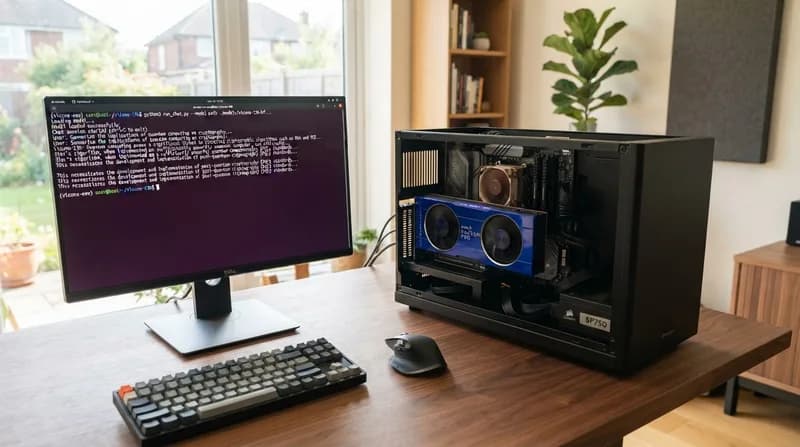
For developers, the integration means that implementing RWKV is as straightforward as utilizing standard `AutoModelForCausalLM` or `pipeline` utilities in Python. As the community continues to push the boundaries of model compression and multi-modal fine-tuning, RWKV is positioned as a cornerstone for those looking to build scalable, long-context AI applications that do not sacrifice performance for resource efficiency.