Bridging the Perception Gap
The field of robotics has long struggled with the challenge of consistent point tracking in cluttered or unpredictable environments. The team at AllenAI has introduced RoboTrack-15M, a foundational model specifically engineered to bridge the gap between static computer vision and active, real-world robotic manipulation. By focusing on robust point tracking, the model provides a framework for robots to better understand and interact with their physical surroundings.
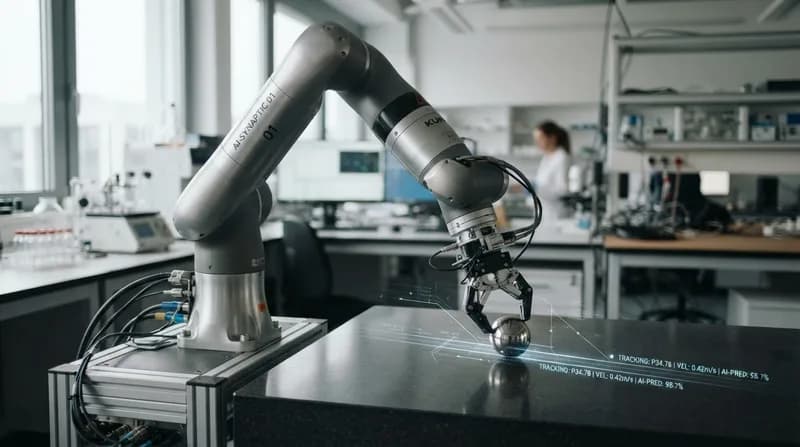
Unlike general-purpose vision models that may prioritize aesthetic scene understanding, RoboTrack-15M is fine-tuned for high-precision tracking. This capability is critical for tasks such as grasping, tool manipulation, and navigating delicate spaces where millimetric accuracy can be the difference between success and failure. The model processes visual input to maintain a continuous lock on specific points of interest, even as the camera or the target object moves.
Why it Matters
Real-world deployment of robots often fails because machines lose track of their targets when lighting shifts or when objects move in complex patterns. RoboTrack-15M addresses these persistent pain points through the following innovations:
- High-Fidelity Tracking: Optimized specifically for the nuances of robotic grippers and moving parts.
- Generalization Capabilities: The model has been trained to handle a diverse range of materials and textures, reducing the need for environment-specific calibration.
- Latency Reduction: By streamlining the tracking architecture, the model allows for more responsive feedback loops during autonomous operation.
The release of this model on the Hugging Face platform marks a significant shift toward open-source progress in embodied AI. By providing researchers and engineers access to the RoboTrack-15M architecture, AllenAI is lowering the barrier for developing autonomous systems capable of complex physical tasks. As the industry looks toward building more capable, general-purpose household and industrial robots, the ability to accurately perceive and track object motion in real-time will remain a non-negotiable technological pillar for the next generation of automation.