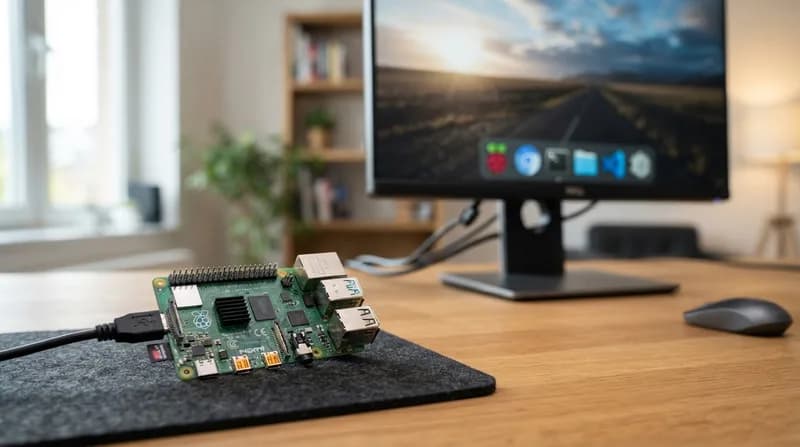
A Fresh Desktop Experience for Raspberry Pi OS
Raspberry Pi OS has officially rolled out version 6.3, introducing a major visual refresh aimed at aligning the platform with contemporary desktop standards. The update shifts away from the traditional, vintage Windows-style taskbar, replacing it with a flexible, modular dock and a full-screen application launcher. This design evolution appears specifically targeted at younger users who are more accustomed to mobile-first interfaces, effectively lowering the barrier to entry for novice programmers and tinkerers.
Users now enjoy three primary configuration options: a standalone dock, a traditional taskbar, or a hybrid setup. When both are active, the system intelligently toggles the panel to a transparent state, revealing only essential status indicators. While the update brings a cleaner, more intuitive aesthetic, some power users have noted the lack of vertical dock orientation in the default Wayland compositor. For those requiring specific workflow adjustments, the classic X11 environment remains an available alternative, ensuring that the Pi continues to cater to both casual learners and advanced hobbyists.
Under-the-Hood Enhancements
Beyond the interface, the version 6.3 update brings critical stability improvements to the underlying software stack. The Wayland desktop components have seen significant maintenance, specifically with updates to labwc and wlroots version 0.20. While the industry continues to move toward a mature Wayland ecosystem, these incremental updates are vital for the Raspberry Pi's continued reliance on efficient, lightweight compositors. The OS maintains its base on the Linux 6.18 kernel, ensuring that the platform remains performant even as it grows in visual complexity.
The Growing Controversy Over RAM Locking
While the software release offers a modern polish, it arrives against a backdrop of intense community debate regarding the hardware's longevity and price. As memory costs have surged, the premium on higher-capacity Raspberry Pi models—now reaching over $300 for 16GB variants—has reignited frustration over the company’s decision to implement firmware-level memory locks. These restrictions effectively prevent users from upgrading their hardware's RAM, even if they possess the technical skill to perform advanced ball-grid-array (BGA) soldering.
The policy, confirmed by Raspberry Pi engineering, is intended to curb fraudulent practices where unauthorized resellers purchase low-capacity boards, upgrade the RAM, and market them as premium, high-capacity models. While this protects the brand from potential support nightmares caused by mismatched component attributes, it has alienated a segment of the hardware-hacking community. Critics argue that this limits the sustainable life of the device. Despite the firm stance from Raspberry Pi, persistent enthusiasts point out that older bootloader versions may bypass these checks, ensuring that for the most dedicated hackers, the possibility of an upgrade remains a viable, albeit difficult, pursuit.