A Paradigm Shift in Periodontal Care
For decades, the standard approach to treating periodontitis—a severe form of gum disease—has been akin to using a sledgehammer to crack a nut. Conventional treatments, including systemic antibiotics and antimicrobial photodynamic therapy (aPDT), effectively kill the bacteria responsible for infection, but they do so indiscriminately. By obliterating both harmful and beneficial microorganisms, these methods often disrupt the delicate oral microbiome, leading to unintended consequences and potential inflammation. Now, a research team at Nagoya University has introduced a sophisticated, targeted alternative: near-infrared photo-antibacterial targeting therapy, or NIR-PAT².
Adapting Cancer-Fighting Technology
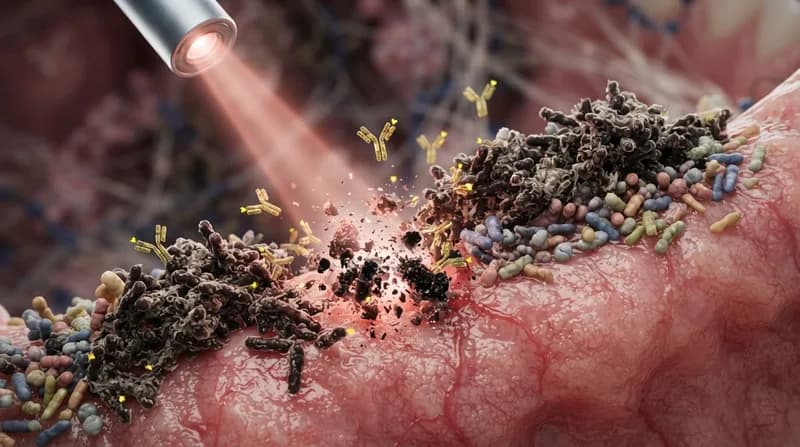
The innovation draws inspiration from advanced cancer treatments known as near-infrared photoimmunotherapy. The researchers have cleverly repurposed this logic for dentistry by utilizing IgY antibodies derived from chicken egg yolks. These antibodies are specifically engineered to identify and latch onto Porphyromonas gingivalis, a notorious 'keystone pathogen' responsible for gum inflammation and the subsequent destruction of alveolar bone. Because these antibodies can be produced efficiently and affordably in large volumes, the treatment offers a highly scalable path for future clinical applications.
Once the antibodies attach to the target bacteria, the site is exposed to near-infrared light. This exposure activates a light-sensitive dye linked to the antibodies, which then creates tiny openings in the bacterial cell membranes. Crucially, this process destroys the pathogen while leaving the physical structure of the cell largely intact. This is a significant advantage over conventional therapies, which often cause bacteria to burst apart, releasing endotoxins like lipopolysaccharide (LPS) that can trigger further immune system distress and inflammation.
Proven Efficacy and Future Outlook
In laboratory studies and testing on mice, the results have been remarkable. The therapy successfully decimated P. gingivalis populations while leaving healthy gum tissue and beneficial Streptococcus bacteria entirely unharmed. Furthermore, treated mice showed a marked decrease in alveolar bone loss, suggesting that this targeted strike is not only safer but potentially more effective at preventing the structural damage that eventually leads to tooth loss. By avoiding damage to surrounding healthy cells, the therapy also promotes faster recovery compared to traditional photodynamic methods.
Why It Matters
- Microbiome Preservation: By leaving the good bacteria alone, the treatment prevents the microbial dysbiosis typically caused by broad-spectrum antibiotics.
- Reduced Inflammation: By keeping the targeted bacterial cell structure intact during elimination, the treatment avoids the release of harmful endotoxins.
- Scalability: Using egg yolk antibodies (IgY) provides a cost-effective and mass-producible mechanism for future dental products.
- Systemic Potential: Because periodontitis is linked to conditions like diabetes and rheumatoid arthritis, effective management of oral bacteria may have broader systemic health benefits.
The Nagoya University team is not stopping at the lab bench. Recognizing that gum disease involves a complex interplay of numerous bacterial species, they are now incorporating artificial intelligence into their research. By analyzing large-scale data on oral microbiota, they aim to map complex bacterial interactions and identify new targets for future iterations of NIR-PAT². While human clinical trials remain the next hurdle, this study represents a major milestone in transitioning from generalized antimicrobial warfare to precise, personalized oral medicine.