Strategic Shifts in Early-Stage Capital
Peak XV Partners, a powerhouse in the global venture capital landscape with over $10 billion in assets under management, is recalibrating its investment strategy to match the shifting realities of the startup ecosystem. The firm has officially raised the investment ceiling for its Surge platform, which now allows for up to $5 million per startup—a significant increase from the previous $3 million threshold. This change reflects a broader market trend where the requirements for securing Series A funding have become increasingly stringent, necessitating more robust financial runways at the seed stage.
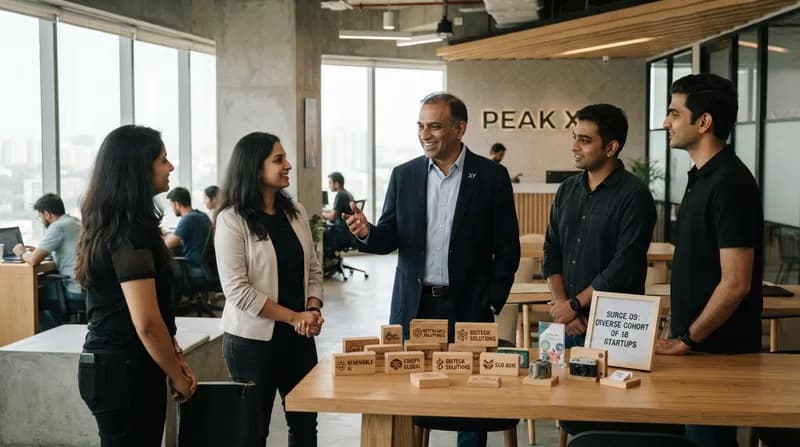
The announcement coincides with the reveal of Surge 12, a diverse cohort of 18 startups. Collectively, these companies have secured over $90 million in seed funding, with Peak XV deploying more than $50 million across the group. This cohort is notably global in scope, with founders hailing from locations as varied as San Francisco and Sydney, underscoring Peak XV’s transition toward a more borderless investment thesis. While the firm remains deeply rooted in India, where over half of the new companies are based, their target markets are increasingly international.
Why It Matters
The rise in capital intensity is a defining feature of the current venture cycle, particularly in sectors like deeptech and artificial intelligence. By expanding its ceiling, Peak XV is positioning itself to support companies that require more upfront investment for R&D, hardware development, or specialized infrastructure. This strategy ensures that high-potential startups can clear the ever-rising bar for Series A milestones without diluting their equity prematurely or running out of runway during intensive development phases.
Spotlight on the Surge 12 Cohort
Alma is tackling personal computing by building a platform aimed at increasing speed and affordability. Founded by veterans from Microsoft Research and the creators behind Sarvam AI, the startup is focused on optimizing how users interact with hardware and software in their daily lives.
August AI operates in the intersection of health and technology. By leveraging AI to complement physician-led care, the platform has scaled impressively, reaching 9 million users across 160 countries, aiming to resolve issues like the medical misdiagnosis that triggered its founding.
Ditto serves as an AI-powered social matchmaker integrated directly into iMessage. Targeting college students, it aims to streamline digital interactions into real-world meetings. The company has already garnered significant attention, having secured a $9.2 million seed round led by Peak XV.
GameStock introduces gamification to the financial sector, applying competitive mechanics to trading and investing. Co-founded by former professional athlete Antoine Mistico, the company seeks to transform the often-staid experience of market participation into an engaging, interactive activity.
HiLoop provides a post-training platform for AI developers, enabling them to adapt open-weight models for specific enterprise applications. Its founding team, which includes experts from the Cambridge research community, is focused on bridging the gap between general-purpose models and specialized business needs.
Hoola Health is a comprehensive pediatric and family healthcare platform. By centralizing services like vaccinations, diagnostics, and therapy under a single umbrella, the company leans on its founder's deep industry experience in hospital operations to improve accessibility.
Kello is disrupting traditional talent acquisition by using AI to assess a candidate's potential and career trajectory rather than static credentials. Founded by Airbnb’s first female engineer, the platform aims to uncover hidden talent in the modern job market.
Kindling acts as a generative storytelling engine for startups. Using AI, it helps founding teams automate the production of corporate communications and marketing content, allowing them to scale their brand presence with minimal manual effort.
Puralink brings robotics into critical infrastructure management. Its autonomous robots are designed to navigate and inspect underground pipe networks, a task made possible by proprietary drive technology derived from rigorous university research.
Reinforce Labs focuses on the growing necessity of AI safety. The company provides tools for enterprise businesses to red-team and evaluate AI models, ensuring that large-scale deployments are secure, reliable, and free from catastrophic errors.
Riffle offers a browser-based collaborative environment for musicians. By consolidating the creative workflow into a single tool, it removes the friction of switching between disparate software applications during the music production process.
Rosella is modernizing the commercial insurance brokerage industry in the United States. By automating the traditionally labor-intensive underwriting and placement process, the company uses AI to create a seamless experience for businesses seeking coverage.
Tribe Money serves as a personal finance assistant. Its AI-driven platform helps users navigate complex investment decisions and keep a close eye on their financial health, simplifying the path to effective wealth management.
ULOOK is looking to the stars with its autonomous satellite systems. Focused on radio-frequency sensing and spectrum intelligence, the company is already building out a global footprint with experienced satellite engineering talent.
Wingit targets the premium consumer segment in India, providing a sophisticated beauty platform that curates high-end product discovery for the modern shopper.