ScienceTechnical Deep Dive

Oestrogen Fluctuations Impact Drug Delivery to Women's Brains

Published
EElectricBuzz Editorial Team
Oestrogen Fluctuations Impact Drug Delivery to Women's Brains
1 min read56 wordsElectricBuzz Editorial Team

The Gist

“Oestrogen levels change during the menstrual cycle, potentially affecting how brain-targeting drugs cross into the brain.”

Oestrogen levels fluctuate throughout the menstrual cycle in women. Recent findings suggest these hormonal changes may influence the ability of drugs to penetrate the brain.

This discovery highlights the importance of considering hormonal cycles when designing and administering treatments that target the brain in women. Adjusting drug delivery based on oestrogen levels could improve therapeutic outcomes.


SPONSORED
The 5 Best Over-Ear ANC Headphones of 2026, Tested & Ranked
Editor's Pick Guide
92/100
Tech & Gadgets•12 min read

The 5 Best Over-Ear ANC Headphones of 2026, Tested & Ranked

We locked five over-ear ANC picks for 2026 — Sony WH-1000XM6, Bose QuietComfort Ultra 2, Soundcore Space One, Sennheiser Momentum 5, and Apple AirPods Max 2 — then stress-tested them on lab metrics, long-term owner truth, and live street prices.

Related Stories

Semantically matched articles, ranked by topic overlap and freshness.

The Hidden Hurdles of California's 'Real Food' School Lunch Mandate
Science

The Hidden Hurdles of California's 'Real Food' School Lunch Mandate

New legislation targeting ultra-processed foods in California schools promises better health outcomes, but a Stanford study reveals the massive logistical and fiscal barriers standing in the way.

Deep-Sea Discoveries: Two New 'Nightmare' Sea Spiders Found in the Salish Sea
Science

Deep-Sea Discoveries: Two New 'Nightmare' Sea Spiders Found in the Salish Sea

Researchers have identified two previously unknown sea spider species in the Salish Sea, marking a significant milestone in marine biodiversity research.

ChromAgeNet: AI Breakthrough Deciphers Cellular Aging via 3D Chromatin Mapping
Science

ChromAgeNet: AI Breakthrough Deciphers Cellular Aging via 3D Chromatin Mapping

Researchers have unveiled an innovative AI tool capable of identifying cellular aging signatures in blood stem cells by analyzing the subtle 3D architecture of nuclear DNA.

Expanding GLP-1 Eligibility: Could Millions More Benefit from Heart-Protective Drugs?
Science

Expanding GLP-1 Eligibility: Could Millions More Benefit from Heart-Protective Drugs?

A groundbreaking new study suggests that current BMI-based criteria for GLP-1 receptor agonists may overlook a significant population at high risk for heart disease.

Heavy Water Isotopes: A New Frontier in Atmospheric Forecasting
Science

Heavy Water Isotopes: A New Frontier in Atmospheric Forecasting

Researchers have unlocked a breakthrough in meteorological precision by utilizing atmospheric heavy water isotopes to map vertical heating processes.

Unlocking the Next Generation: New Breakthrough in Self-Amplifying mRNA Vaccines
Science

Unlocking the Next Generation: New Breakthrough in Self-Amplifying mRNA Vaccines

Researchers at Queen Mary University of London have discovered a way to bypass cellular antiviral defenses, potentially transforming the efficacy of next-generation mRNA vaccines and gene therapies.

A Breakthrough in Soil Science: Streamlined DNA-Phosphorus Testing for Sustainable Farming
Science

A Breakthrough in Soil Science: Streamlined DNA-Phosphorus Testing for Sustainable Farming

Researchers have developed a faster, more cost-effective method for tracking DNA-bound phosphorus, offering a clearer window into how soil microbes support plant nutrition.

Unlocking the Genetic Blueprint: How House Cats Are Advancing Human Oncology
Science

Unlocking the Genetic Blueprint: How House Cats Are Advancing Human Oncology

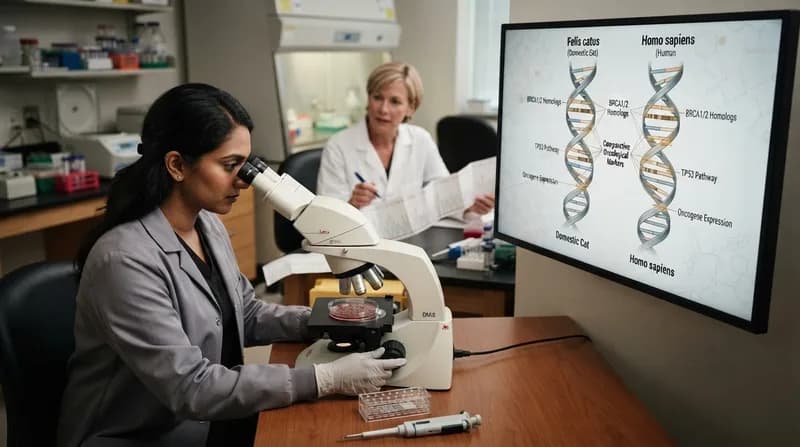
A landmark genetic study of feline tumors has revealed striking similarities to human cancer, bridging a gap between veterinary and human medicine through the power of precision oncology.