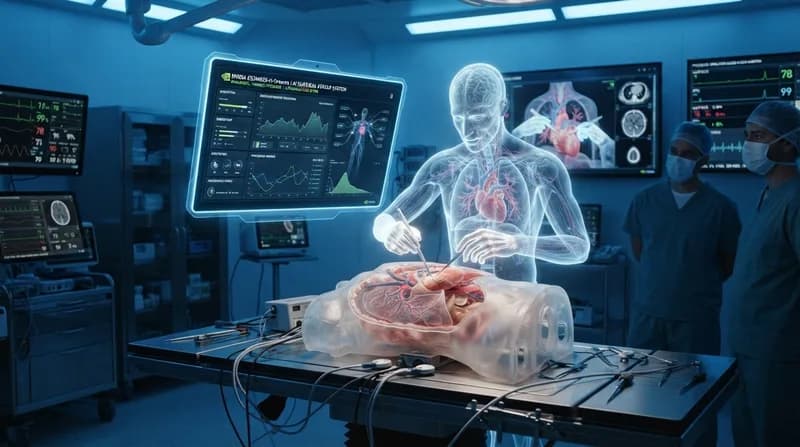
NVIDIA has showcased a comprehensive workflow for developing healthcare robotics, utilizing the NVIDIA Isaac platform to bridge the gap between digital twins and physical deployment. The initiative focuses on reducing the complexity of creating autonomous assistants for medical environments.
From Simulation to the Operating Room
The development cycle begins in NVIDIA Isaac Sim, a photorealistic simulation environment where robots can be trained using reinforcement learning and perception algorithms without risking patient safety. This virtual testing ground allows developers to iterate on robot designs and software configurations at high speeds, significantly cutting down development time.
Advanced Perception and Deployment
Once the robots are validated in simulation, the workflow utilizes NVIDIA Isaac ROS to provide hardware-accelerated packages for perception and navigation. By integrating AI-powered vision and spatial awareness, these robots can safely navigate complex hospital corridors and assist medical staff with logistical tasks or patient monitoring. The transition to physical hardware is managed through a unified software stack, ensuring that the intelligence gathered in the virtual world translates accurately to real-world performance.