E-BUZZ ME Logo
Tech & GadgetsTechnical Deep Dive

NOAA Shifts Weather Prediction Workloads to Google Cloud

Published
NOAA Shifts Weather Prediction Workloads to Google Cloud
1 min read147 words

The Gist

The National Oceanic and Atmospheric Administration is moving away from traditional supercomputers in favor of Google Cloud's H4D virtual machines.

The National Oceanic and Atmospheric Administration (NOAA) has announced a significant shift in its computational strategy, opting to utilize Google Cloud infrastructure for its weather-predicting operations. This move marks a departure from the agency's traditional reliance on dedicated on-premise supercomputers.

Transitioning from HPE Cray to H4D VMs

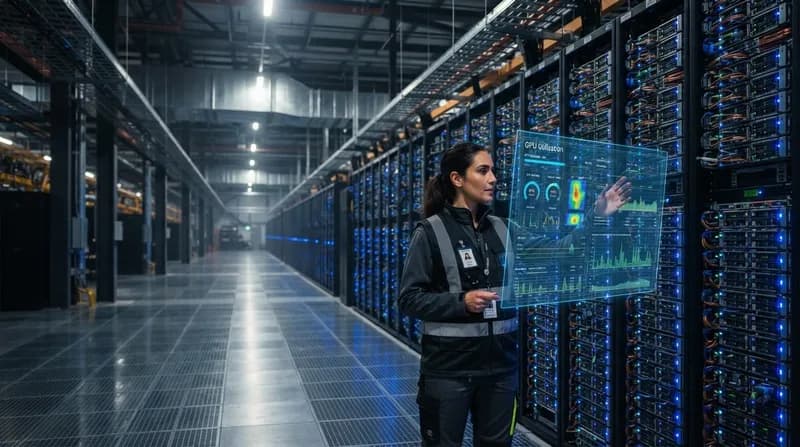
Historically, NOAA has utilized HPE Cray machines to handle the massive data processing requirements of meteorological forecasting. Under the new agreement, the agency will transition these critical workloads to Google Cloud H4D virtual machines (VMs). These specialized instances are designed to handle high-performance computing (HPC) tasks, offering the scalability and flexibility inherent in cloud environments.

The shift is expected to streamline NOAA's ability to process complex atmospheric models, potentially improving the speed and accuracy of weather alerts. By leveraging cloud-native resources, the agency aims to modernize its infrastructure while maintaining the rigorous standards required for national safety and environmental monitoring.


Related Stories

Semantically matched articles, ranked by topic overlap and freshness.

NextEra and Brookfield to Revitalize Kentucky Uranium Site into $100 Billion Data Center Hub
Tech & Gadgets65%

NextEra and Brookfield to Revitalize Kentucky Uranium Site into $100 Billion Data Center Hub

A massive $100 billion transformation project aims to turn a former Cold War uranium-enrichment facility into a state-of-the-art data center campus and power plant.

Microsoft Cloud Growth Hits Highest Levels Since 2022 Driven by AI Demand
Tech & Gadgets65%

Microsoft Cloud Growth Hits Highest Levels Since 2022 Driven by AI Demand

Microsoft's cloud unit is experiencing its fastest growth in four years, signaling that the company's aggressive pivot toward AI services is paying off with enterprise customers.

Microsoft Cloud Revenue Surges While AI Monetization Remains Gradual
Tech & Gadgets64%

Microsoft Cloud Revenue Surges While AI Monetization Remains Gradual

Microsoft reports strong cloud performance driven by Azure, though direct revenue from Microsoft 365 AI tools is growing at a more measured pace.

FTC Deadlock Clears Path for $1.8 Billion IonQ-SkyWater Merger
Tech & Gadgets63%

FTC Deadlock Clears Path for $1.8 Billion IonQ-SkyWater Merger

IonQ is set to finalize its acquisition of SkyWater Technology after the Federal Trade Commission failed to reach a consensus on imposing regulatory conditions.

Lilian Weng Returns to OpenAI Following Brief Departure from Thinking Machines
Artificial Intelligence61%

Lilian Weng Returns to OpenAI Following Brief Departure from Thinking Machines

Lilian Weng, the former VP of AI Safety Research at OpenAI, has rejoined the organization after a short stint at Thinking Machines.

TechCrunch Disrupt 2026 to Explore the Future of AI and SaaS
Artificial Intelligence61%

TechCrunch Disrupt 2026 to Explore the Future of AI and SaaS

The upcoming TechCrunch Disrupt 2026 conference will feature a dedicated AI Stage to address critical industry shifts, including the SaaS reckoning and agent security gaps.

Microsoft Shifts Strategy to Compete Directly with OpenAI and Anthropic
Artificial Intelligence61%

Microsoft Shifts Strategy to Compete Directly with OpenAI and Anthropic

Microsoft is pivoting its AI strategy by pitching homegrown models and tools that put the tech giant in direct competition with its partners.

Stonepeak CEO Highlights Infrastructure Demand Fueled by AI Growth
Tech & Gadgets61%

Stonepeak CEO Highlights Infrastructure Demand Fueled by AI Growth

Stonepeak Chairman Michael Dorrell discusses the massive investment opportunities emerging from the surging demand for new data centers and AI infrastructure.