A Major Boost for Sustainable Transportation
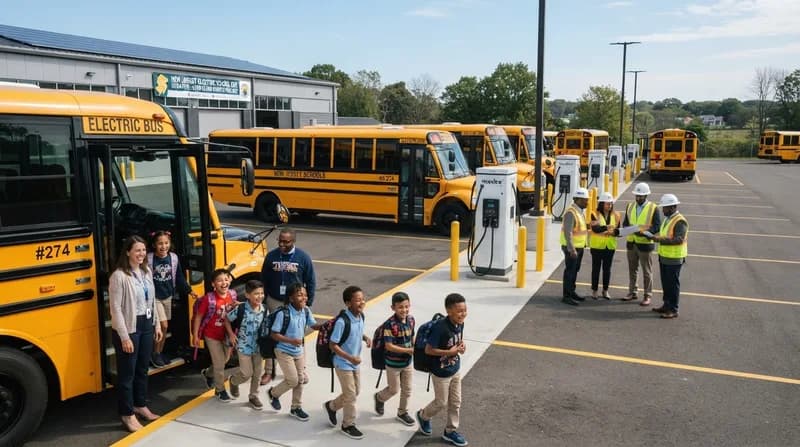
The state of New Jersey is doubling down on its commitment to clean air and sustainable mobility. The New Jersey Department of Environmental Protection (DEP) recently announced the allocation of nearly $15 million in grant funding, aimed specifically at replacing aging diesel school buses with modern, battery-electric alternatives. This latest investment is set to put 44 zero-emission vehicles on the road, supported by the deployment of 40 dedicated charging stations across various school districts and transport service providers.
This initiative represents the third installment of New Jersey’s comprehensive Electric School Bus Grant Program. With this newest injection of capital, the state has now successfully facilitated the acquisition of 145 electric school buses and supported the installation of 129 charging hubs throughout the region. The program, which stems from legislation authorized in 2022, is backed by a $45 million commitment over a three-year window, drawing support from the Board of Public Utilities’ Clean Energy Fund.
Why It Matters: Prioritizing Health and Infrastructure
The transition to electric school buses serves a dual purpose: it significantly reduces local greenhouse gas emissions and directly improves the immediate health of students. Diesel exhaust is a well-documented contributor to poor air quality, and by removing these pollutants from school zones and residential neighborhoods, the state is actively mitigating the respiratory risks posed to children. Notably, the program mandates that at least 50% of the funding be directed toward communities historically burdened by environmental pollution, ensuring that the benefits of cleaner air are distributed equitably.
Support Beyond the Hardware
Recognizing that transitioning a fleet is a complex logistical challenge, New Jersey is providing more than just capital. Every grant recipient is granted access to the New Jersey Fleet Advisor tool, a sophisticated resource designed to shepherd school districts through the electrification process. This includes the creation of a personalized Fleet Electrification Roadmap, offering detailed guidance on vehicle selection, site-specific charging infrastructure assessments, and long-term cost projections.
Key Program Facts
- Total Recent Funding: Nearly $15 million.
- Equipment Delivered: 44 electric buses and 40 charging stations.
- Cumulative Impact: 145 total buses and 129 charging stations supported to date.
- Target Demographic: School districts and private contractors, with a heavy focus on overburdened communities.
- Strategic Goal: Drastic reduction of diesel-related pollutants to improve air quality near schools.
As the state continues to refine its strategy, these grants serve as a blueprint for how local government can effectively catalyze the transition to a zero-emission future by aligning financial incentives with expert technical guidance.