The Shift from Model Wars to Agent Utility
For months, the AI industry has been trapped in a perpetual cycle of model updates, with firms like OpenAI and Anthropic constantly jockeying for position on performance benchmarks. However, the latest series of product drops—featuring Anthropic’s Opus 5.5 and OpenAI’s GPT-6—has been notably eclipsed by a different strategy. Meta has successfully shifted the focus away from raw parameter counts and toward tangible, daily-use consumer applications with its Muse AI agent.
Unlike traditional chatbots that remain tethered to browser tabs, Meta is positioning Muse as an ubiquitous digital assistant. By integrating this intelligence into hardware, Meta is bypassing the 'chatbot fatigue' that has begun to set in across the software landscape. Early adoption metrics suggest that Muse is effectively capturing user interest at a rate that outpaces the initial mobile launch of ChatGPT, signaling a pivotal shift in how consumers interact with generative AI.
Hardware Integration: Beyond the Screen
Meta’s strategy for Muse is deeply rooted in physical hardware, aiming to integrate its AI agent into the moments of our daily lives where phones are inconvenient or disruptive. The company’s roadmap for Muse includes sophisticated implementation within its existing smart glasses, essentially creating a hands-free, heads-up AI experience. This allows the AI to perceive the world through the wearer’s perspective, providing context-aware assistance rather than just responding to text prompts.
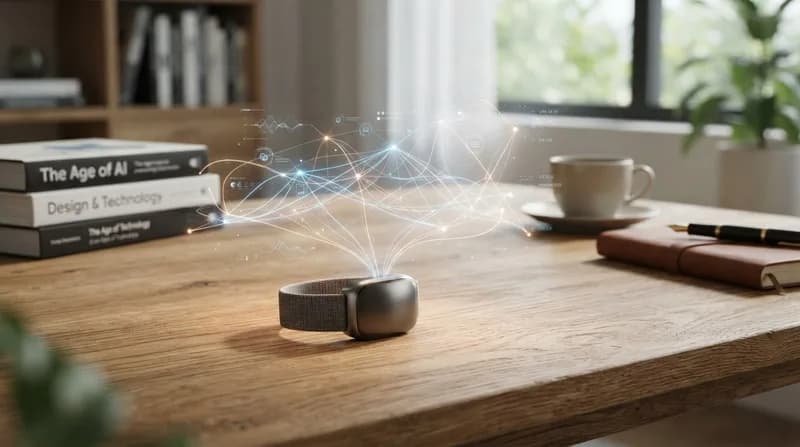
Perhaps more unconventional is Meta's plan to package Muse within a small, Tamagotchi-style wearable. This device represents a distinct departure from the sterile, corporate design language of current AI products. By prioritizing a more playful, accessible form factor, Meta is attempting to normalize AI interaction for a younger demographic, treating Muse more like a personal companion than a utility tool. This hardware-first, agent-centric philosophy is proving that the next wave of AI competition won't be won by model complexity alone, but by how seamlessly that intelligence integrates into the fabric of physical consumer products.
Why It Matters
- Hardware Dominance: By controlling both the AI agent (Muse) and the wearable devices, Meta is capturing the end-to-end user experience, a luxury OpenAI and Anthropic currently lack.
- Market Penetration: Early adoption numbers suggest that embedding AI into wearables effectively removes friction, leading to higher engagement than app-based models.
- Future Trajectory: As Muse migrates to specialized wearables, the focus will likely shift to how well these agents manage real-world tasks versus virtual computation.
The Broader AI Ecosystem
While Meta captures headlines, the wider industry continues to churn with activity. The surge in agent-based computing is becoming the primary focus for venture capital, evidenced by companies like Ema securing substantial funding to deploy teams of AI agents for enterprise automation. These agents are designed to handle complex, multi-step workflows across HR, IT, and finance, marking a transition from 'AI as a writer' to 'AI as a workforce participant.'
As the sector matures, we are seeing a decoupling of pure research labs from consumer-facing product companies. Startups that once aimed to build foundation models are increasingly shifting their business models to build on top of established leaders like Muse, effectively creating an ecosystem of specialized agents. For the average user, this means the future of AI isn't just one model—it's an array of intelligent tools that live in our pockets, on our faces, and inside our devices, constantly humming in the background to simplify the friction of modern life.