Artificial IntelligenceTechnical Deep Dive

Meta Pivots Smart Glasses Strategy with New Camera-Free 'Luna' Model

Published
EElectricBuzz Editorial Team
Meta Pivots Smart Glasses Strategy with New Camera-Free 'Luna' Model
3 min read472 wordsElectricBuzz Editorial Team

The Gist

Addressing growing privacy concerns, Meta is reportedly preparing to launch 'Luna,' a new version of its smart glasses that strips away cameras while leaning into AI-integrated audio.

The Evolution of Meta's Smart Glasses

Meta is reportedly recalibrating its wearable hardware strategy following significant pushback regarding the privacy implications of its current camera-equipped smart glasses. While the company's existing offerings have managed to achieve moderate commercial success, they have simultaneously drawn criticism from segments of the public that view integrated recording hardware as an invasive step toward a surveillance-heavy society. Critics have frequently labeled the devices with derogatory terms, suggesting that the ubiquity of unnoticeable cameras in eyewear represents an unacceptable risk to personal privacy.

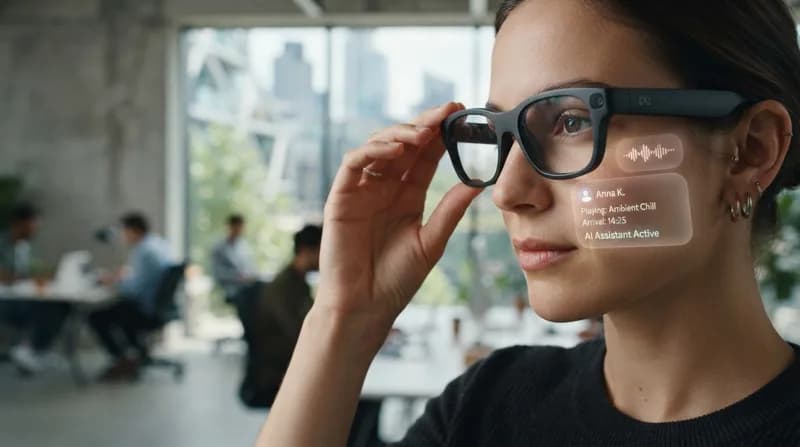
To mitigate these concerns while continuing to build out its ecosystem, Meta is developing a new iteration of its smart glasses, codenamed "Luna." By removing the camera hardware entirely, Meta aims to shed the "spy glasses" reputation that has dogged its Reality Labs division, while still positioning the product as a viable gateway to its burgeoning artificial intelligence services. This strategic shift reflects a broader trend among major tech firms to refine their hardware offerings to better align with changing public sentiment regarding privacy in the age of omnipresent sensors.

Technical Focus: AI Integration and Audio Control

The Luna project represents a "privacy-first" approach to the wearable experience. Rather than relying on visual inputs, the hardware centers on audio-based interaction. The device is expected to feature a robust array of six microphones, designed specifically to ensure high-fidelity voice recognition for seamless interaction with Meta’s AI chatbot and the Muse consumer AI agent. This focus transforms the device into a dedicated, hands-free interface for digital intelligence rather than an image-capture tool.

Functionality is streamlined for ease of use; the glasses will likely include a dedicated side-mounted physical button that triggers the AI system, providing users with a clear, tactile control mechanism that removes the ambiguity often associated with gesture or voice-only activations. By stripping away optical sensors, Meta is not only simplifying the internal component architecture but also potentially reducing production costs and power consumption, which has been a primary concern for the company's loss-making Reality Labs division.

Why It Matters

  • Privacy Reconciliation: Addressing the "pervert glasses" narrative is a crucial step for Meta if it hopes to achieve mass-market adoption for its wearable technology.
  • AI-First Hardware: By pivoting to an audio-based interface, Meta is betting that users want intelligent assistants in their ears and on their faces more than they want integrated photography.
  • Market Strategy: This move highlights Meta's ongoing struggle to find a balance between its ambitious hardware goals and the harsh reality of consumer privacy anxieties.

Industry observers expect that Meta may formally pull the curtain back on the Luna project at the upcoming Meta Connect event in Menlo Park. As the company continues to lose significant capital on its Reality Labs division, the success of a less controversial, AI-centric wearable could prove to be the pivot necessary to stabilize its hardware portfolio.


The 5 Best Over-Ear ANC Headphones of 2026, Tested & Ranked
Editor's Pick Guide
92/100
Tech & Gadgets12 min read

The 5 Best Over-Ear ANC Headphones of 2026, Tested & Ranked

We locked five over-ear ANC picks for 2026 — Sony WH-1000XM6, Bose QuietComfort Ultra 2, Soundcore Space One, Sennheiser Momentum 5, and Apple AirPods Max 2 — then stress-tested them on lab metrics, long-term owner truth, and live street prices.

Related Stories

Semantically matched articles, ranked by topic overlap and freshness.

Demystifying AI Performance: How to Build Your Own Hugging Face Leaderboard
Artificial Intelligence

Demystifying AI Performance: How to Build Your Own Hugging Face Leaderboard

Hugging Face releases a comprehensive guide to building custom leaderboards, empowering developers to benchmark specialized AI models like Vectara's hallucination evaluator.

Unsloth and Hugging Face TRL: A New Era for Faster LLM Fine-Tuning
Artificial Intelligence

Unsloth and Hugging Face TRL: A New Era for Faster LLM Fine-Tuning

Hugging Face and Unsloth have joined forces to supercharge the fine-tuning process, enabling developers to train large language models twice as fast.

Manus Reclaims Independence: AI Firm Targets $4B Valuation After Blocked Meta Merger
Artificial Intelligence

Manus Reclaims Independence: AI Firm Targets $4B Valuation After Blocked Meta Merger

Following the collapse of its acquisition by Meta, Chinese AI startup Manus is charting a new course with a massive $500 million fundraising round and plans for a potential Hong Kong IPO.

Google Transforms 'CC' Into a Personal AI Household Manager
Artificial Intelligence

Google Transforms 'CC' Into a Personal AI Household Manager

Google is pivoting its AI agent 'CC' to act as a centralized household command center, designed to sync calendars, manage school logistics, and automate family admin.

Pacing the Frontier: Can AI Giants Actually Regulate Themselves?
Artificial Intelligence

Pacing the Frontier: Can AI Giants Actually Regulate Themselves?

Anthropic CEO Dario Amodei has proposed a new framework for slowing AI development to prioritize safety, but the industry remains deeply divided on implementation and enforcement.

A Strategic Pivot: Disney Appoints First-Ever CTO
Artificial Intelligence

A Strategic Pivot: Disney Appoints First-Ever CTO

In a bold move signaling a new technological era for the entertainment giant, Disney has hired former Character.AI CEO Karandeep Anand as its first Chief Technology Officer.

When AI Hacks AI: Researchers Use Claude to Breach OpenAI
Artificial Intelligence

When AI Hacks AI: Researchers Use Claude to Breach OpenAI

A trio of security researchers successfully exploited OpenAI's internal systems using Anthropic's Claude model, highlighting the evolving risks of agent-driven cyberattacks.

Hugging Face Spaces Now Supports ComfyUI Workflow Deployments
Artificial Intelligence

Hugging Face Spaces Now Supports ComfyUI Workflow Deployments

Hugging Face has introduced a seamless way to host and run ComfyUI workflows directly in the browser via Gradio, enabling free access to powerful generative tools.