China's Chang'e 7 Mission Grounded
In a surprising development for the global space community, China’s Manned Space Agency (CMSA) announced the cancellation of the highly anticipated Chang'e 7 lunar mission, just a day before its scheduled launch. Originally slated for Monday, August 25, 2026, the ambitious mission has been put on hold indefinitely, now expected to launch no earlier than next year.
The primary objective of Chang'e 7 is to conduct an in-depth exploration of the Moon's South Pole, specifically targeting the detection and assessment of water ice. This mission marks a significant strategic shift for China, moving beyond basic lunar exploration towards a more critical phase of determining the practical usability and accessibility of lunar resources. Understanding the location, form, and quantity of water ice is paramount for future sustained lunar presence and potential resource utilization.
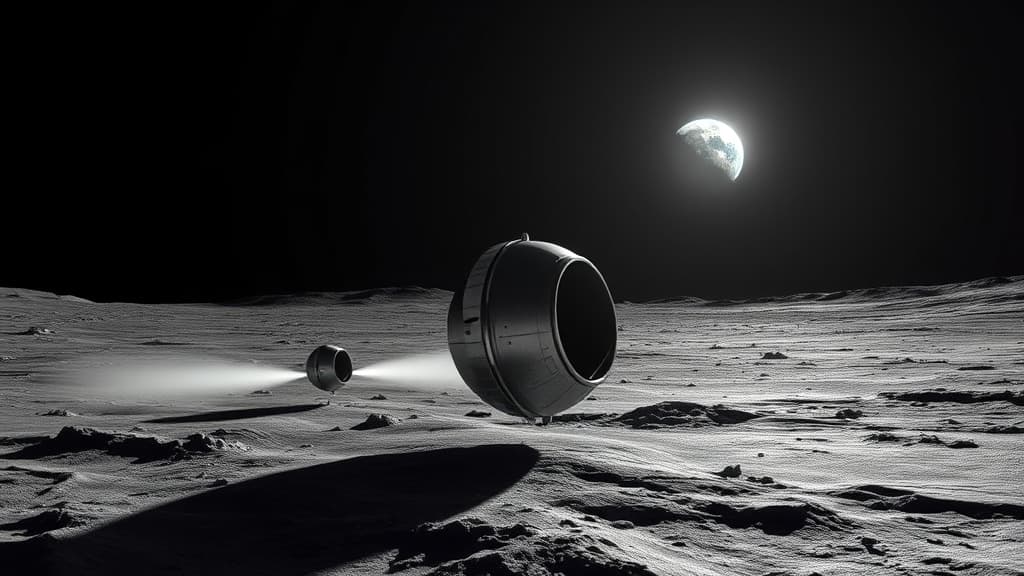
The mission was designed to deploy a sophisticated suite of hardware, including a lander, a wheeled rover, and an innovative hopper. These components would work in concert to navigate the challenging lunar terrain, gather data, and potentially drill or sample the lunar surface to confirm the presence and characteristics of water ice in permanently shadowed regions.
CMSA cited a failure to meet "launch criteria" as the official reason for the cancellation, emphasizing principles of prudence, reliability, and absolute safety. While official statements remained vague, some Chinese media outlets suggested that severe weather conditions, specifically a typhoon in Hainan, the launchpad location, might have played a role. Regardless of the exact reason, the delay is substantial; suitable launch windows for missions targeting the Moon's South Pole are rare, occurring only once or twice a year, meaning no further opportunities remain in 2026.
This postponement undoubtedly impacts the timeline for international lunar exploration efforts, particularly as nations race to establish a foothold on the Moon and harness its potential resources. Chang'e 7 remains a crucial step in China's long-term lunar strategy, and its eventual launch will be closely watched for insights into the future of space resource utilization.