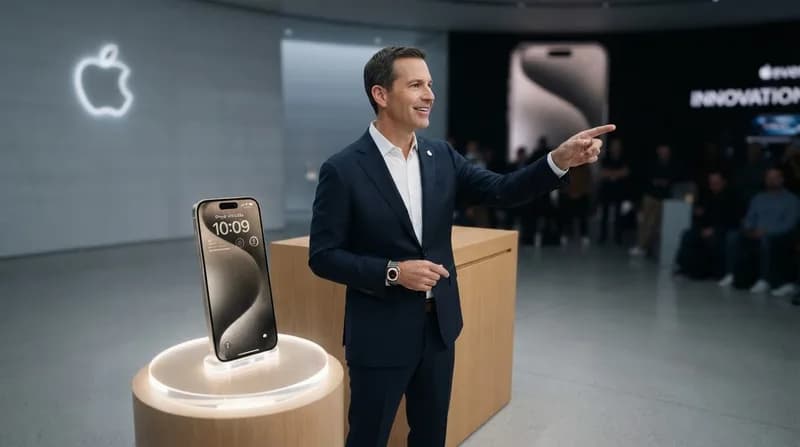
The Vision of the Intelligent Personal Hub
In a significant transition moment for Apple, new CEO John Ternus has signaled that the company’s AI strategy will not involve pivoting to experimental hardware gadgets. Instead, the tech giant is doubling down on its most successful product ever: the iPhone. During the recent 'Surprise and Shine' event in Cupertino, Ternus articulated a vision where the smartphone acts as the definitive 'intelligent personal hub,' blending on-device processing power with cloud-based intelligence to create an indispensable digital companion.
According to Ternus, the hardware requirements for the next generation of AI are already sitting in billions of pockets worldwide. He emphasized that for a device to truly serve as an AI hub, it must possess three core characteristics: a deep understanding of the user’s personal context, constant physical proximity, and a high-performance processor capable of running sophisticated models locally. With its integrated camera arrays, sensitive microphones, and refined display technology, the iPhone meets these criteria in a way that specialized AI hardware startups have yet to replicate.
The Core Pillar: Privacy as a Competitive Advantage
Beyond the technical specifications, Ternus made a sharp distinction between Apple’s approach and that of its industry rivals. As AI becomes more invasive, Apple is positioning itself as the privacy-first alternative. Ternus explicitly criticized competitors for viewing user data as an asset to be harvested, stored, and exploited. In contrast, he reaffirmed that Apple Intelligence is engineered to prioritize on-device computation, ensuring that users retain control over their personal information.
This philosophy of 'privacy-by-design' serves as the anchor for Apple’s strategy. By ensuring that sensitive tasks remain local to the silicon inside the iPhone, the company hopes to build a foundation of trust that cloud-reliant competitors cannot easily match. As the AI landscape becomes increasingly cluttered with speculative hardware, Apple’s message is clear: users do not need a new device—they need a smarter version of the one they already trust.
Why It Matters
- Hardware Maturity: Apple is betting on the existing form factor rather than chasing novel AI-specific hardware like screenless pins or projectors.
- Strategic Continuity: Despite the change in leadership from Tim Cook to John Ternus, the focus remains firmly on the ecosystem and seamless integration.
- On-Device Priority: By leaning heavily into edge computing, Apple is attempting to mitigate the security risks associated with cloud-based model interaction.
The Path Forward
As John Ternus steps into his role as CEO, the implications for the broader tech market are significant. By framing the iPhone as the ultimate AI tool, Apple is essentially challenging the narrative that AI requires a radical hardware revolution. Instead, the company is betting that the most successful AI integration will be the one that is the most familiar, integrated, and respectful of user privacy. For developers and competitors alike, this signals that the battle for the AI consumer will be fought on the battlefield of existing hardware ecosystems rather than in the lab of new, unproven devices.