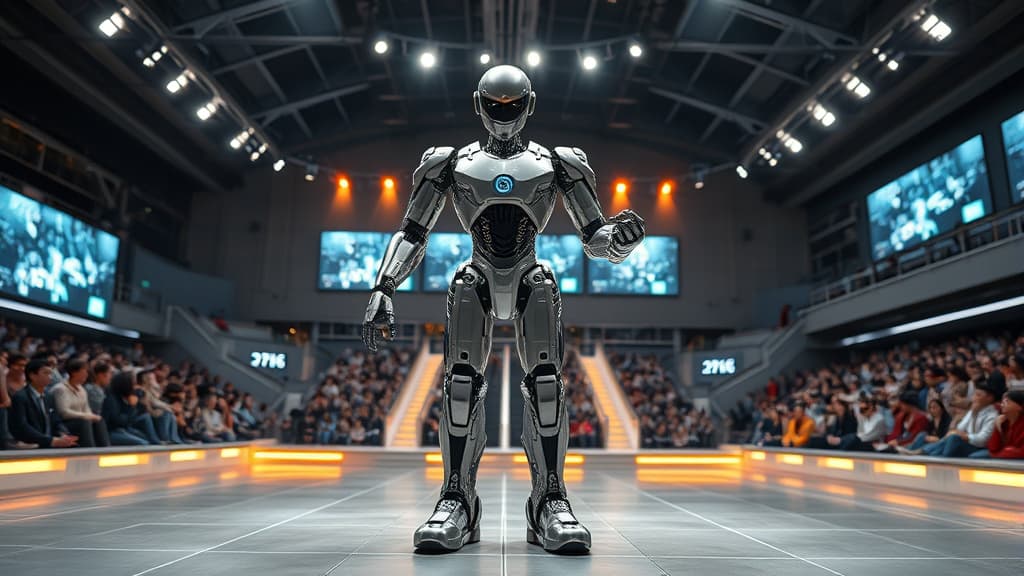
Humanoid Robotics Hits a Major Milestone in Beijing
The recent 2026 Beijing World Humanoid Robot Games emerged as a pivotal moment for the global robotics industry, demonstrating a significant leap forward in the capabilities of bipedal machines. The event highlighted remarkable progress in robotic agility, intelligence, and the seamless integration of real-time AI processing, signaling a future where humanoids play an increasingly integral role in various sectors.
Competitors at the games showcased robots performing a myriad of complex tasks with an unprecedented level of human-like fluidity and reduced latency in decision-making. Key challenges included tests of dynamic balance across uneven terrains, high-speed navigation over rough surfaces, precise manipulation of fragile objects, and rapid responses to simulated emergency scenarios. These demonstrations underscored the industry's success in developing more robust and adaptable robotic systems.
Beyond the impressive displays of physical prowess and computational intelligence, industry leaders and analysts pointed to a crucial economic shift. Significant decreases in the production costs of essential components like actuators and sensors are now making the widespread integration of humanoid robots into factories and logistics networks an economically viable reality. This cost efficiency, combined with enhanced operational capabilities, paves the way for a transformative decade where human and robotic workforces collaborate more closely than ever before, driving efficiencies and innovation across global industries.