Revolutionizing Speech-to-Text Pipelines
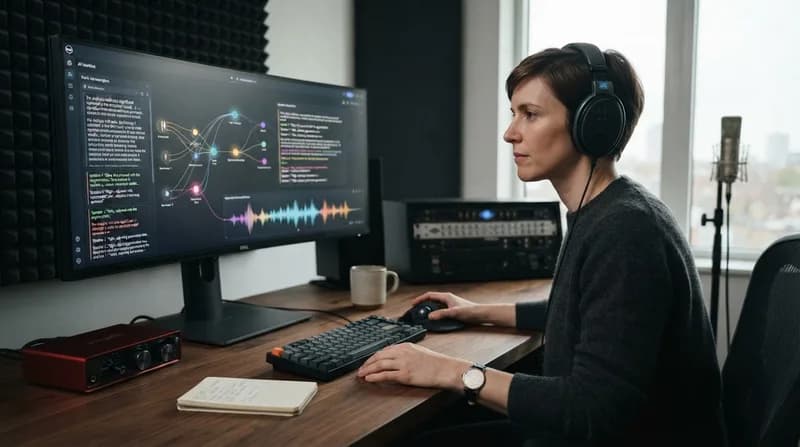
Hugging Face has introduced a high-performance architecture for Automatic Speech Recognition (ASR) that leverages the power of OpenAI’s Whisper-large-v3 model. By deploying this model through Hugging Face Inference Endpoints, developers can now access professional-grade transcription capabilities that go far beyond basic text conversion. This integration is designed to handle complex audio environments, making it an essential tool for enterprise-level applications requiring precision and scalability.
The Power of Speculative Decoding and Diarization
The standout feature of this update is the integration of speculative decoding, which significantly accelerates inference speeds. By using a smaller, faster draft model to predict token sequences, the system reduces the computational load on the primary model, allowing for rapid real-time performance without sacrificing accuracy. This is a game-changer for developers who need to process large volumes of audio data while keeping latency to an absolute minimum.
Furthermore, the workflow includes advanced speaker diarization, which identifies and segments individual speakers within an audio track. This ensures that transcripts are not just accurate, but also contextually formatted to distinguish between participants, a critical requirement for meeting transcripts, podcasts, and video captioning services.
Why It Matters
- Reduced Latency: Speculative decoding minimizes wait times for large-scale transcription tasks.
- Enhanced Utility: Integrated diarization transforms raw text into structured, speaker-aware documents.
- Deployment Ease: Hugging Face Inference Endpoints allow for seamless, managed hosting, removing the infrastructure overhead for engineering teams.
By streamlining these complex processes into a single, cohesive endpoint, Hugging Face continues to lower the barrier for developers looking to integrate state-of-the-art voice AI into their own software products, pushing the limits of what is possible with open-source foundation models.