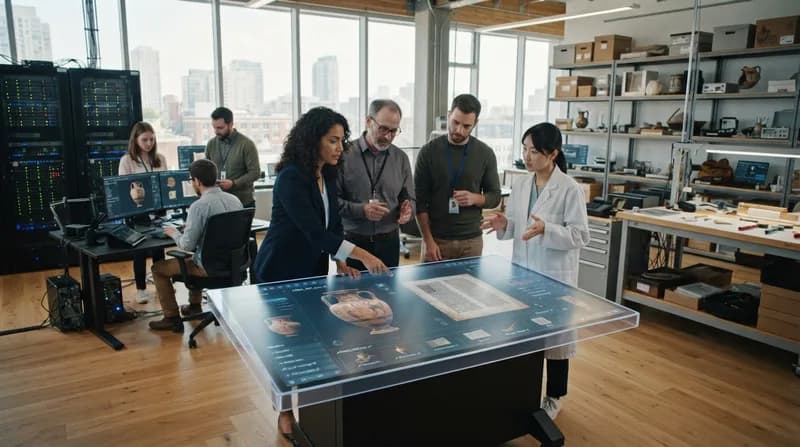
Bridging History and AI
Hugging Face is significantly broadening its footprint in the preservation of human heritage with the launch of its dedicated hub for Galleries, Libraries, Archives, and Museums (GLAM). This new initiative provides cultural institutions with the infrastructure needed to host, share, and deploy machine learning models specifically tailored for digitized historical collections, archives, and rare documents.
By migrating these massive, often fragmented datasets onto a centralized platform, the GLAM initiative aims to make centuries of human knowledge more accessible to researchers and developers. Institutions can now leverage Hugging Face's collaboration tools to refine models that can transcribe handwritten manuscripts, classify artistic styles, or perform advanced metadata extraction on fragile archival items that were previously locked away in physical storage.
Why It Matters
- Accessibility: Standardizes how researchers interact with complex museum data.
- Innovation: Enables the use of specialized natural language processing (NLP) on historical texts.
- Preservation: Uses machine learning to digitize and protect information from aging physical media.
The move represents a paradigm shift for archival science. By treating museum catalogs with the same technical rigor as software repositories, Hugging Face is fostering a future where AI acts as the primary librarian for humanity's collective memory. The platform supports everything from small-scale dataset organization to large-scale deployment of multimodal models, ensuring that even under-resourced institutions can benefit from the cutting edge of AI development. As more museums adopt this framework, we can expect a surge in AI-driven historical insights, revealing patterns and connections in human history that would have remained hidden under traditional analog archival methods.