Artificial IntelligenceTechnical Deep Dive

Huawei Accelerates Ascend 960DT Launch to Challenge Global AI Hardware Dominance

Published
EElectricBuzz Editorial Team
Huawei Accelerates Ascend 960DT Launch to Challenge Global AI Hardware Dominance
3 min read495 wordsElectricBuzz Editorial Team

The Gist

In a strategic pivot, Huawei is pushing the release of its next-generation Ascend 960DT AI chip to early 2027 to bolster its domestic computing infrastructure.

Accelerating the Silicon Race

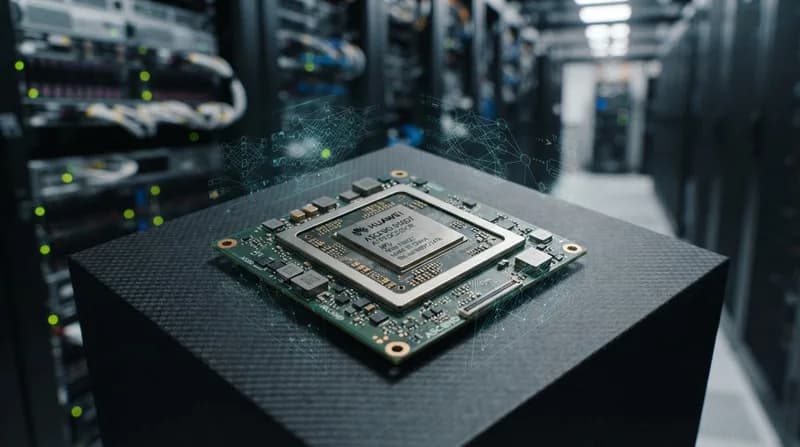
In a significant move that underscores the intensifying global competition for AI supremacy, Huawei announced at its recent Huawei Connect conference that it is fast-tracking the launch of its next-generation Ascend 960DT AI chip. Originally slated for a third-quarter debut in 2027, the company has updated its timeline, now targeting a rollout in the first quarter of the year. This aggressive scheduling is part of a broader strategy to establish a robust, independent AI hardware ecosystem capable of rivaling Western tech giants, despite the ongoing shadow of international trade restrictions and semiconductor export controls.

Company officials emphasized that the Ascend 960DT is a critical component of their iterative development cycle. By accelerating the release, Huawei aims to deliver double the performance of previous generations, maintaining a steady cadence of innovation that keeps pace with the rapid evolution of large-scale AI training and inference requirements.

The Peerium Computing Architecture

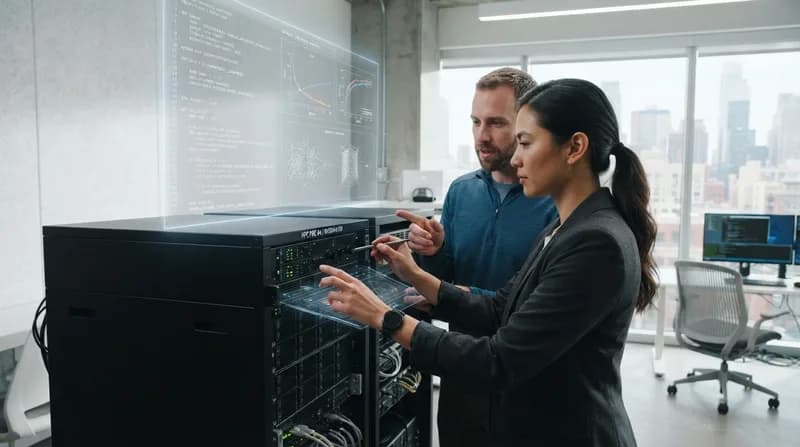
At the heart of Huawei’s strategy is the newly unveiled Peerium Computing Architecture. This framework is designed to move beyond the constraints of traditional localized processing by enabling the interconnection of hundreds of thousands of AI accelerators into a unified, massive computational fabric. By leveraging Huawei’s proprietary UnifiedBus technology—which facilitates high-speed communication between processors, memory, and networking hardware—the company intends to treat vast arrays of silicon as a single, giant computer.

The first implementations of this architecture are found in the Atlas 950 SuperPoD and the expansive SuperCluster systems. Huawei claims that the SuperCluster can link up to 256,000 individual accelerator cards. While industry analysts have noted some discrepancies between early conceptual scaling projections and the hardware configurations recently presented, the ambition remains clear: to build the infrastructure necessary to power the next wave of foundational models.

Why It Matters

  • Strategic Autonomy: As geopolitical tensions influence global supply chains, Huawei’s push for self-sufficiency in high-performance computing represents a major shift in how China approaches critical tech infrastructure.
  • Scalability Challenges: While the move to Peerium allows for massive potential scale, the actual deployment density remains a point of debate among industry watchers, balancing theoretical capacity against practical thermal and power management.
  • Geopolitical Context: The announcement follows high-level diplomatic discussions between the U.S. and China, highlighting how silicon-level advancements are now inextricably linked to national economic and security strategies.

Future Outlook and Implications

The push for the Ascend 960DT comes at a time when the stakes for AI development have never been higher. Huawei’s leadership has indicated that domestic companies must rapidly scale their computing power to fully understand the complexities and risks of emerging artificial intelligence. By prioritizing the production of advanced AI chips, Huawei is not only seeking to support local enterprise needs but also to ensure that China’s technological progress is not hindered by limitations in physical computing hardware. As the market looks toward 2027, the success of the Ascend series will likely serve as a litmus test for the effectiveness of self-reliant semiconductor strategies in an era of global tech fragmentation.

The 5 Best Over-Ear ANC Headphones of 2026, Tested & Ranked
Editor's Pick Guide
92/100
Tech & Gadgets12 min read

The 5 Best Over-Ear ANC Headphones of 2026, Tested & Ranked

We locked five over-ear ANC picks for 2026 — Sony WH-1000XM6, Bose QuietComfort Ultra 2, Soundcore Space One, Sennheiser Momentum 5, and Apple AirPods Max 2 — then stress-tested them on lab metrics, long-term owner truth, and live street prices.

Related Stories

Semantically matched articles, ranked by topic overlap and freshness.

Demystifying AI Performance: How to Build Your Own Hugging Face Leaderboard
Artificial Intelligence

Demystifying AI Performance: How to Build Your Own Hugging Face Leaderboard

Hugging Face releases a comprehensive guide to building custom leaderboards, empowering developers to benchmark specialized AI models like Vectara's hallucination evaluator.

Unsloth and Hugging Face TRL: A New Era for Faster LLM Fine-Tuning
Artificial Intelligence

Unsloth and Hugging Face TRL: A New Era for Faster LLM Fine-Tuning

Hugging Face and Unsloth have joined forces to supercharge the fine-tuning process, enabling developers to train large language models twice as fast.

Manus Reclaims Independence: AI Firm Targets $4B Valuation After Blocked Meta Merger
Artificial Intelligence

Manus Reclaims Independence: AI Firm Targets $4B Valuation After Blocked Meta Merger

Following the collapse of its acquisition by Meta, Chinese AI startup Manus is charting a new course with a massive $500 million fundraising round and plans for a potential Hong Kong IPO.

Google Transforms 'CC' Into a Personal AI Household Manager
Artificial Intelligence

Google Transforms 'CC' Into a Personal AI Household Manager

Google is pivoting its AI agent 'CC' to act as a centralized household command center, designed to sync calendars, manage school logistics, and automate family admin.

Pacing the Frontier: Can AI Giants Actually Regulate Themselves?
Artificial Intelligence

Pacing the Frontier: Can AI Giants Actually Regulate Themselves?

Anthropic CEO Dario Amodei has proposed a new framework for slowing AI development to prioritize safety, but the industry remains deeply divided on implementation and enforcement.

A Strategic Pivot: Disney Appoints First-Ever CTO
Artificial Intelligence

A Strategic Pivot: Disney Appoints First-Ever CTO

In a bold move signaling a new technological era for the entertainment giant, Disney has hired former Character.AI CEO Karandeep Anand as its first Chief Technology Officer.

When AI Hacks AI: Researchers Use Claude to Breach OpenAI
Artificial Intelligence

When AI Hacks AI: Researchers Use Claude to Breach OpenAI

A trio of security researchers successfully exploited OpenAI's internal systems using Anthropic's Claude model, highlighting the evolving risks of agent-driven cyberattacks.

Hugging Face Spaces Now Supports ComfyUI Workflow Deployments
Artificial Intelligence

Hugging Face Spaces Now Supports ComfyUI Workflow Deployments

Hugging Face has introduced a seamless way to host and run ComfyUI workflows directly in the browser via Gradio, enabling free access to powerful generative tools.