A New Standard for Unified Storage
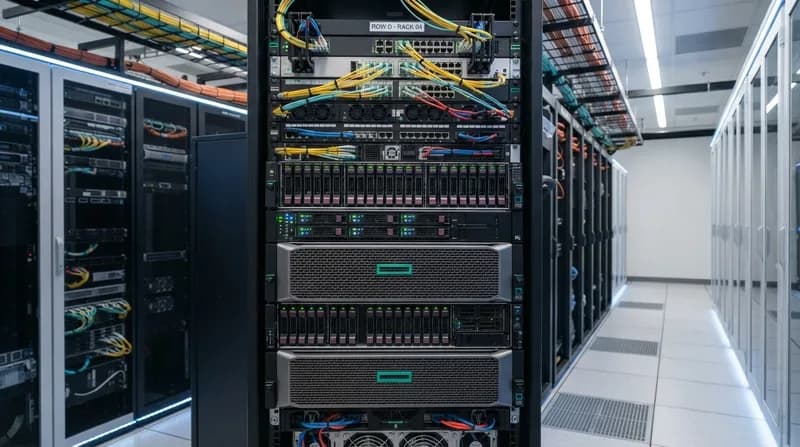
For years, the storage industry has tossed around the term "unified" with reckless abandon, often applying it to disparate products that share nothing more than a management console and a marketing budget. HPE is looking to move past this cynical status quo with the general availability of its Alletra Storage MP B10000 Release 6. By bringing block and file workloads onto a single, disaggregated scale-out architecture, HPE is attempting to prove that unification should exist deep within the code base, not just on the surface.
The B10000 is designed for enterprises looking to eliminate infrastructure silos. While massive unstructured workloads—such as high-end AI analytics, EDA, and media production—remain the domain of the specialized X10000 series, the B10000 targets the essential "adjacent" workloads that typically clog data centers. By allowing for the independent scaling of performance and capacity, the B10000 ensures that IT departments are no longer forced to over-provision expensive controller hardware just because they need more storage space.
The Architecture of Efficiency
At the heart of the B10000 is a "shared-everything" architecture. Unlike traditional arrays that lock users into rigid controller-and-media increments, this system separates compute from capacity. This design shift is not merely technical; it has profound economic implications. Organizations can now map their infrastructure spend to their actual growth curves, scaling compute power when performance needs spike and adding storage capacity only when the data footprint expands.
This unified approach extends to the operating environment. Because both block and file services run on the same architecture and OS, the operational experience is streamlined. This prevents the common scenario where a company thinks it has consolidated its storage, only to realize they are managing two completely different workflows under one management window.
AI-Driven Operations and Agentic Intelligence
Release 6 represents a significant leap forward in how HPE applies AI to data center management. Beyond simple dashboards, the integration of Storage Copilot and Agentic Support Automation moves the platform into the realm of proactive management. These systems utilize natural-language interaction to provide recommendations and, more importantly, execute actions.
The "agentic" nature of the support model is particularly notable. Traditional monitoring relies on predefined rules and threshold alerts, which often trigger too late to prevent a system impact. HPE’s signature-less AI agents, however, continuously analyze operational behavior. They can identify anomalies in service consumption patterns before they trigger a system-wide alert, allowing for remediation of issues that have never been seen before in that specific environment.
Cyber Resilience as a Layered Defense
In an era where ransomware is a constant threat, the B10000 treats security as a fundamental architectural pillar rather than an add-on. The platform now includes native, real-time detection capabilities that operate across both block and file protocols. By combining this with application-level protection via Zerto and integrated recovery through StoreOnce, HPE has created a multi-layered defense system. This strategy recognizes that in modern enterprise environments, no single feature can catch every threat; instead, resilience is built by ensuring detection and recovery mechanisms are active at every point in the data stack.
Why it Matters
- Operational Simplicity: By consolidating block and file protocols into a single, shared-everything architecture, IT teams can significantly reduce their management overhead.
- Economic Flexibility: Independent scaling of compute and capacity allows businesses to optimize costs based on actual consumption, avoiding the "forklift upgrade" cycle of legacy arrays.
- Proactive Intelligence: The move to signature-less agentic support marks a transition from reactive alerting to autonomous problem-solving.
- Holistic Security: Native ransomware detection across different workloads ensures that security is baked into the infrastructure rather than layered on top as an afterthought.