The Grid Connection Crisis
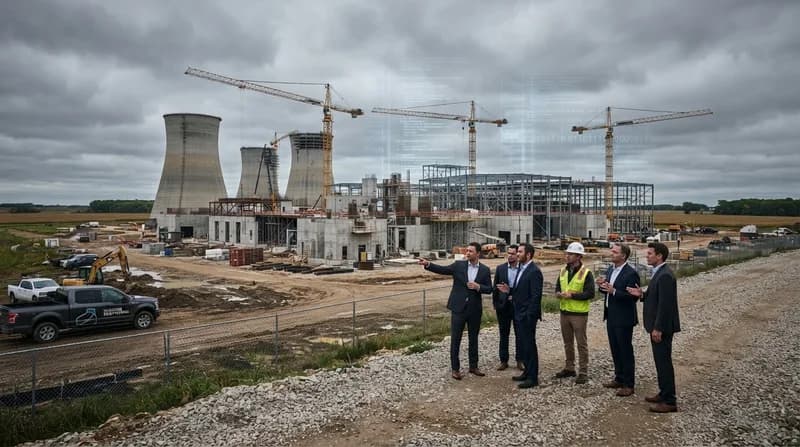
Oracle’s ambitious expansion into the artificial intelligence infrastructure market is hitting a significant roadblock in Wisconsin. The company's planned high-capacity datacenter, known as Project Lighthouse, is facing a substantial risk of missing its 2027 delivery target due to the complex regulatory requirements governing electrical grid connections. While the datacenter is designed to handle an massive 902 MW computing load with a total electricity demand of 1.3 GW, it remains effectively useless without the necessary transmission infrastructure to move power from the grid to the facility.
The primary bottleneck lies with the American Transmission Company (ATC), which has proposed over $2 billion in infrastructure upgrades—including high-voltage power lines and new substations—to support the region’s burgeoning datacenter appetite. However, these construction projects are currently stalled in the administrative queue. The Public Service Commission of Wisconsin (PSC) recently restarted the approval process after finding the initial application incomplete, pushing potential timelines deeper into the future.
Why It Matters
The situation in Wisconsin highlights a growing structural tension in the AI industry: the disconnect between rapid computational scaling and the physical reality of grid capacity. As AI firms continue to lease massive quantities of GPU hardware, the demand for stable, high-capacity electricity has outpaced the speed of regulatory oversight. This creates a cascading risk for companies like Oracle, which have committed billions in capital expenditures only to find that the "on-ramp" to that power is subject to multi-year bureaucratic cycles.
- Operational Delays: Even if grid connection approvals are granted, initial power availability does not equate to service availability. Commissioning large-scale cooling and electrical systems for AI workloads requires significant lead time, meaning even an best-case scenario for power delivery leaves little margin for error.
- Financial Exposure: Oracle faces significant financial pressure, with estimates suggesting over $100 million annually in financing costs just to secure the electricity commitments for the Wisconsin site alone.
- Market Impact: With recent reports of massive AI hardware lease agreements, such as the $7 billion deal involving Tencent, any slippage in datacenter capacity could have profound implications for Oracle’s ability to meet customer demand and execute its aggressive fiscal 2027 capital expenditure strategy.
Projected Timelines and Outlook
Industry research firm Aterio has outlined several scenarios for the project's completion, none of which provide the buffer Oracle originally hoped for. In their most optimistic projection, partial power might reach the facility by October 2027, with full capacity not realized until August 2028. A more realistic base case pushes those milestones back to December 2027 and October 2028, respectively. If regulatory reviews face further friction, the site might not be fully operational until mid-2029.
These developments come alongside reports of Oracle issuing force majeure notices on other projects, such as the Project Jupiter site in New Mexico, suggesting the company is preparing for potential delays across its portfolio. As the race for AI dominance intensifies, the ability to navigate local utility regulations and grid infrastructure development is proving to be just as critical as the hardware silicon itself.