Revolutionizing the Stable Diffusion Interface
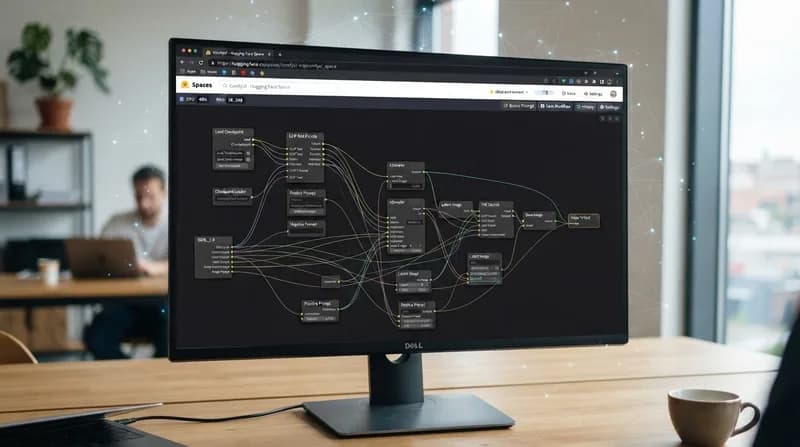
The developer community behind the ubiquitous AUTOMATIC1111 Stable Diffusion web UI is undergoing a major transformation. By transitioning to a Gradio-based workflow, the project aims to solve long-standing technical hurdles related to UI responsiveness and modular integration. This shift marks a departure from traditional custom-built frontend architectures, opting instead for a framework that prioritizes seamless AI model deployment and state management.
For power users, this update is more than just a visual refresh. The integration allows for deeper customization of parameter controls, making it easier to manage complex inference pipelines without sacrificing the core functionality that made the original interface an industry staple. It effectively bridges the gap between raw scripting and a polished, production-ready interface.
Why It Matters
- Enhanced Modularity: The new structure allows developers to inject components more easily, accelerating the plugin ecosystem.
- Performance Optimization: Gradio's internal handling of heavy data streams reduces the bottleneck issues frequently encountered during long text-to-video generation tasks.
- Unified Backend: By aligning with standard library protocols, the project becomes more accessible for researchers aiming to deploy custom models without writing extensive frontend boilerplate.
As AI-driven media creation tools like FastVideo continue to demand higher computational overhead, the move to a more robust, standardized framework is essential. This architectural overhaul ensures that the interface can scale alongside the rapid evolution of generative models, moving away from static design patterns toward a highly dynamic, component-driven experience. The community expects this transition to drastically lower the barrier for integrating new, high-parameter diffusion models directly into the standard creative workflow.