E-BUZZ ME Logo
Artificial IntelligenceTechnical Deep Dive

Gradio Introduces Support for Custom Frontends via Backend Integration

Published
Gradio Introduces Support for Custom Frontends via Backend Integration
1 min read147 words

The Gist

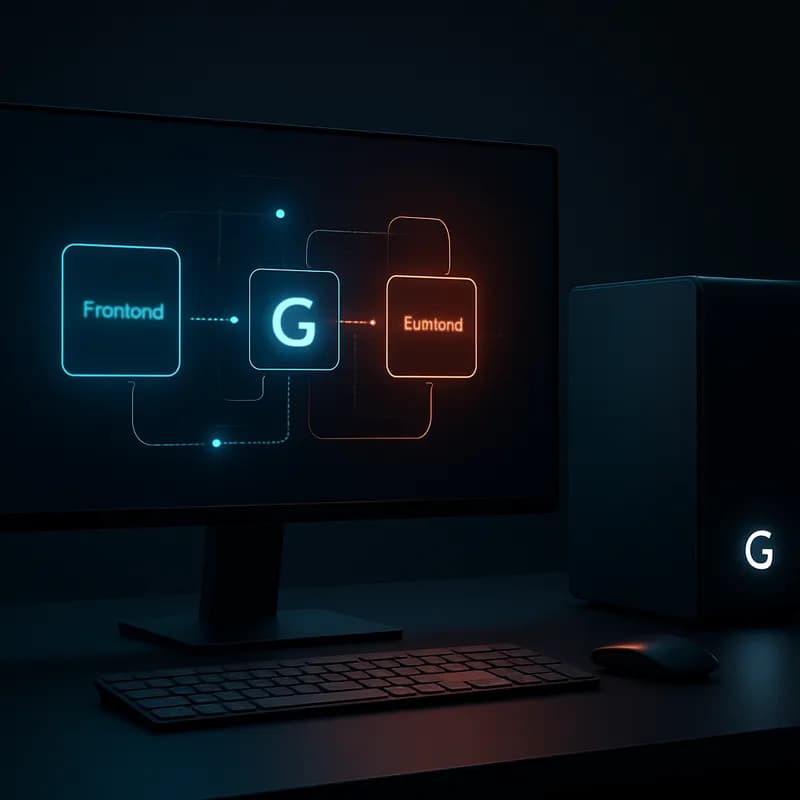
A new update to Gradio allows developers to decouple the backend logic from the standard UI, enabling the use of any custom frontend framework.

Gradio, the popular open-source Python library for building machine learning interfaces, has announced a significant shift in its architecture. Developers can now leverage Gradio's robust backend capabilities while utilizing any custom frontend of their choice.

Decoupling UI from Logic

Historically, Gradio was known for its rapid prototyping capabilities, providing a predefined set of UI components that automatically sync with Python functions. The new update allows for greater flexibility, enabling teams to build bespoke user interfaces using frameworks like React, Vue, or Svelte, while still benefiting from Gradio’s efficient handling of data streaming, authentication, and state management on the backend.

Expanding the Ecosystem

This move positions Gradio as a more versatile tool for production-grade applications. By allowing developers to bypass the standard Gradio UI, the library can now be integrated into existing corporate web ecosystems without sacrificing the ease of connecting complex AI models to a web interface.


Related Stories

Semantically matched articles, ranked by topic overlap and freshness.

Runway Debuts Media Router to Streamline Access to Generative Models
Artificial Intelligence64%

Runway Debuts Media Router to Streamline Access to Generative Models

Runway is expanding beyond model development by launching a specialized router that provides developer API access to a diverse range of third-party media models.

Microsoft and Hugging Face Expand Strategic AI Partnership
Artificial Intelligence63%

Microsoft and Hugging Face Expand Strategic AI Partnership

Microsoft and Hugging Face are deepening their collaboration to streamline the deployment of open-source AI models on the Azure cloud platform.

NanoVLM: A Minimalist Approach to Training Vision-Language Models in Pure PyTorch
Artificial Intelligence63%

NanoVLM: A Minimalist Approach to Training Vision-Language Models in Pure PyTorch

A new open-source repository called nanoVLM is simplifying the training process for Vision-Language Models by using a streamlined, pure PyTorch implementation.

Falcon-Edge: The New Frontier of Efficient 1.58-bit Language Models
Artificial Intelligence61%

Falcon-Edge: The New Frontier of Efficient 1.58-bit Language Models

TII introduces Falcon-Edge, a series of universal, fine-tunable language models utilizing 1.58-bit quantization for high performance on edge devices.

Microsoft Shifts from OpenAI to In-House Image Generation Models
Tech & Gadgets60%

Microsoft Shifts from OpenAI to In-House Image Generation Models

Microsoft is reportedly replacing OpenAI’s image-generating technology with its own proprietary models across key platforms like PowerPoint and Bing.

Nvidia Extends AI Reach to the Lunar Surface
Artificial Intelligence60%

Nvidia Extends AI Reach to the Lunar Surface

Nvidia's hardware is heading to the moon as the tech giant seeks to provide computational power in the furthest reaches of the universe.

AI Safety Guardrails Create New Hurdles for Offensive Cybersecurity Research
Artificial Intelligence60%

AI Safety Guardrails Create New Hurdles for Offensive Cybersecurity Research

Stringent safety filters from AI leaders like OpenAI and Anthropic are inadvertently slowing down the discovery of critical software vulnerabilities.

Experts Question Distillation Claims Behind Moonshot AI's Kimi K3 Success
Artificial Intelligence59%

Experts Question Distillation Claims Behind Moonshot AI's Kimi K3 Success

Industry experts suggest that Moonshot AI's Kimi K3 model owes its performance to more than just the exploitation of Anthropic’s Fable model.