The Rise of the Desktop Agent
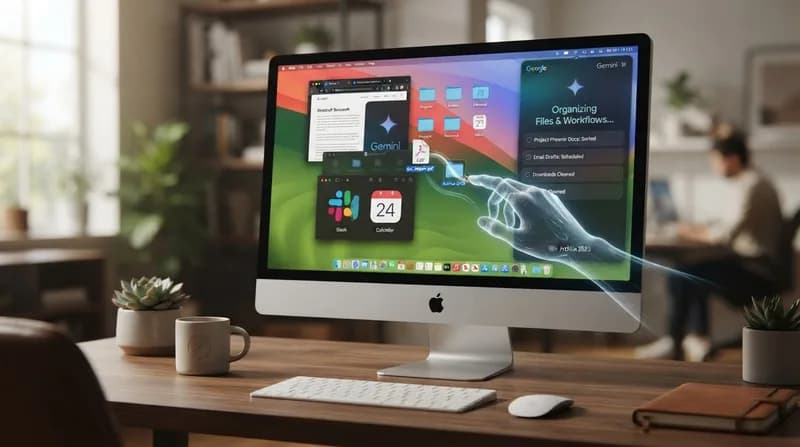
Google has officially entered the agentic AI race on the desktop by granting its Gemini application for macOS the ability to perform tasks directly on behalf of the user. By allowing the model to interact with the local operating system, Google is shifting the paradigm from a simple chatbot to a functional digital assistant capable of executing complex, multi-step workflows without constant human intervention.
This new feature works by observing and manipulating the desktop environment. Once a user provides a prompt, Gemini can navigate through native applications and web browsers to complete requests. Whether it is sorting local documents into specific folders, populating repetitive online forms, or synthesizing data from various dashboards into a presentation, the AI operates in the background while keeping the user’s primary workspace and cursor free for other productivity needs.
How It Works and Safety Measures
Transparency and control remain at the forefront of this rollout. As the agent works, users are provided with a live preview within their chat interface, allowing them to monitor exactly what the system is doing in real-time. Safety is handled through a human-in-the-loop mechanism, requiring users to approve actions before they are executed. At any point, the user retains the ability to pause or terminate the AI's activity, ensuring that the machine never oversteps its bounds while working across local files and web applications.
Why It Matters
- Workflow Automation: It targets the mundane, repetitive tasks that consume significant professional time, such as batch file processing and data entry.
- Native Integration: Unlike browser-bound AI, this feature bridges the gap between web information and local application data, creating a more cohesive digital ecosystem.
- Competitive Landscape: This move signals Google's push to remain relevant against aggressive moves from competitors like OpenAI and Anthropic, who have already established foothold in the agentic space.
Availability and Requirements
As of the initial launch, the feature is limited to English-language users located in the United States. To access these advanced agentic capabilities, users must be utilizing the dedicated Gemini desktop application for Mac and maintain an active Google AI Plus, Pro, or Ultra subscription. While Google has not yet specified a timeline for international expansion or potential support for other operating systems, this development marks a significant milestone in how desktop software interacts with large foundation models. By allowing Gemini to "use" the computer, Google is moving closer to the vision of a truly autonomous personal assistant that doesn't just provide answers, but actively achieves outcomes.