ScienceTechnical Deep Dive

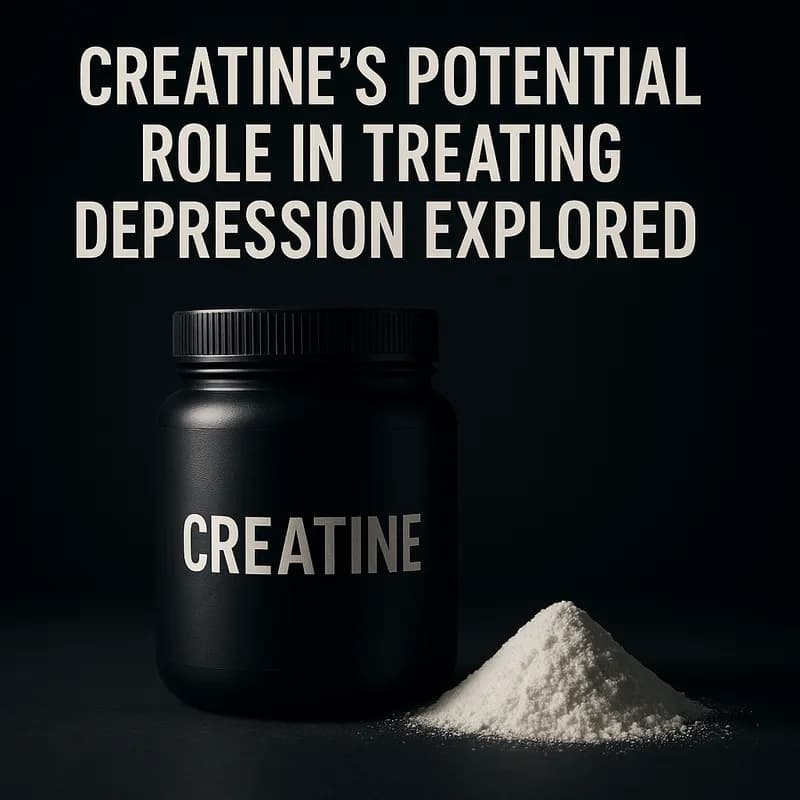
Creatine's Potential Role in Treating Depression Explored

Published
EElectricBuzz Editorial Team
Creatine's Potential Role in Treating Depression Explored
1 min read90 wordsElectricBuzz Editorial Team

The Gist

“Creatine, known for muscle benefits, is studied for depression treatment effects, showing mixed results in clinical trials.”

Creatine, typically used to enhance muscle performance, is being explored for its potential to improve brain energy and alleviate depression symptoms. A recent review examined five randomized clinical trials involving 238 participants assessing creatine's impact on depression.

The results were mixed. Two trials reported symptom improvements in women with major depressive disorder when creatine was added to conventional treatments. However, three other studies found no significant benefits.

These findings suggest creatine may help some individuals with depression, particularly women, but further research is needed to confirm efficacy and understand mechanisms.

SPONSORED
The 5 Best Over-Ear ANC Headphones of 2026, Tested & Ranked
Editor's Pick Guide
92/100
Tech & Gadgets•12 min read

The 5 Best Over-Ear ANC Headphones of 2026, Tested & Ranked

We locked five over-ear ANC picks for 2026 — Sony WH-1000XM6, Bose QuietComfort Ultra 2, Soundcore Space One, Sennheiser Momentum 5, and Apple AirPods Max 2 — then stress-tested them on lab metrics, long-term owner truth, and live street prices.

Related Stories

Semantically matched articles, ranked by topic overlap and freshness.

A Cosmic Rebirth: Did Hubble Just Find a Planet Born From a Dead Star?
Science

A Cosmic Rebirth: Did Hubble Just Find a Planet Born From a Dead Star?

Astronomers have uncovered evidence of a 'second-generation' planet orbiting a white dwarf, challenging our understanding of how planetary systems evolve.

Closing the Gap: Why Aspirin Remains Underutilized for Lynch Syndrome Prevention
Science

Closing the Gap: Why Aspirin Remains Underutilized for Lynch Syndrome Prevention

New research reveals a significant disconnect between clinical evidence and patient usage of aspirin for colorectal cancer prevention in those with Lynch syndrome.

Unlocking the Neural Code: Researchers Identify 5 Distinct Brain Profiles of Depression
Science

Unlocking the Neural Code: Researchers Identify 5 Distinct Brain Profiles of Depression

A landmark study has identified five unique biological brain signatures associated with depression, potentially ending the 'one-size-fits-all' era of psychiatric treatment.

The Lightsaber Antenna: Scientists Pioneer Wireless Transmission Using Plasma Beams
Science

The Lightsaber Antenna: Scientists Pioneer Wireless Transmission Using Plasma Beams

Researchers at NC State have developed a revolutionary antenna that uses laser-generated plasma instead of metal, offering a glimpse into a future of tunable, shape-shifting communication hardware.

Immunotherapy Breakthrough: Bowel Cancer Remissions Sustain After 33 Months
Science

Immunotherapy Breakthrough: Bowel Cancer Remissions Sustain After 33 Months

A groundbreaking clinical trial reveals that a short course of immunotherapy prior to surgery effectively keeps stage two and three bowel cancer patients recurrence-free for nearly three years.

New Fusion Physics Map Could Revolutionize Reactor Design
Science

New Fusion Physics Map Could Revolutionize Reactor Design

Physicists at Princeton have identified a 'heat-first' strategy that could significantly lower the energy barrier for achieving self-sustaining fusion.

The Hidden Diagnostic Gap: Global Survey Reveals Pediatric Troponin Testing Crisis
Science

The Hidden Diagnostic Gap: Global Survey Reveals Pediatric Troponin Testing Crisis

A new international survey highlights a critical lack of standardized cardiac troponin benchmarks for children, leaving pediatric diagnostic care reliant on adult data.

The Lifelong Impact: How Childhood Environment Predicts Adult Mortality
Science

The Lifelong Impact: How Childhood Environment Predicts Adult Mortality

A massive new meta-analysis of over 8.5 million people reveals a sobering link between early-life socioeconomic status and long-term health outcomes.