A Milestone in the Land of the Rising Sun
For a global automotive giant like BYD, hitting 10,000 cumulative vehicle sales in a single market might seem like a modest achievement compared to its massive output in China. However, in Japan—a country notoriously protective of its domestic brands and deeply entrenched in its own automotive culture—this figure marks a significant turning point. It took BYD roughly two and a half years to reach its first 5,000 sales, but the following 5,000 arrived in just 15 months, signaling a sharp acceleration in consumer interest.
This momentum is largely attributed to the company’s strategic decision to cater directly to Japanese preferences. By embracing the unique "kei car" segment, BYD has proved that it understands the local landscape: a preference for compact, efficient, and highly practical box-style vehicles. With a lineup that is exclusively electrified, ranging from nimble city cars to SUVs, BYD is positioning itself as a credible, forward-thinking alternative to Japan’s traditional automotive heavyweights.
The Racco: A Kei Car Challenger
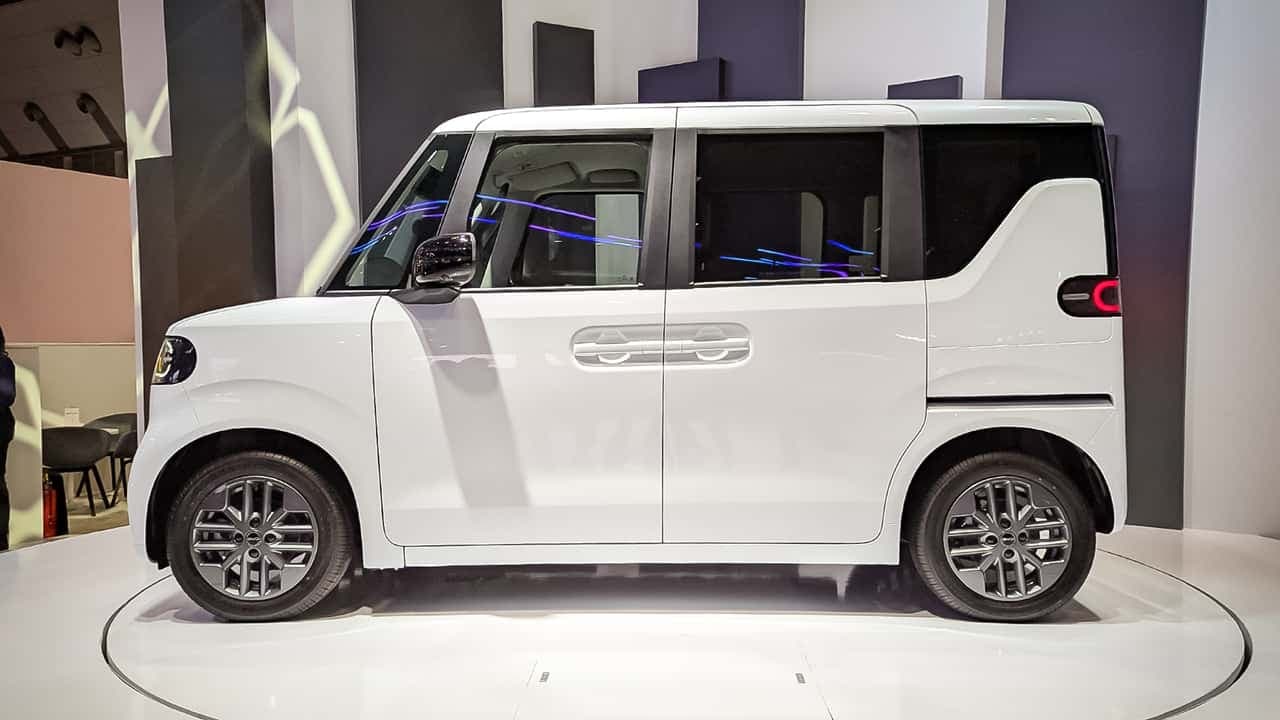
The star of this growth story is the Racco, the first kei car ever produced by a non-Japanese manufacturer. Specifically engineered for the Japanese market, the Racco retains the classic tall-body silhouette and small footprint that define the segment. Its most practical inclusion is the set of sliding rear doors, a feature that Japanese buyers have long favored for urban parking and narrow spaces. Since its launch in late July, the Racco has seen remarkable demand, recording over 1,500 orders within its first month on the market.
The vehicle’s appeal isn't just about utility; it’s about value. BYD has structured its pricing to compete aggressively with the market leader, the Nissan Sakura. The base model, equipped with a 22.4-kWh battery, offers a range of approximately 130 miles (210 km) on the WLTC cycle, starting at ¥2.145 million. Consumers have clearly gravitated toward the higher-tier trims, with roughly 80% of buyers opting for the 300 Premium version. This model offers an even more robust 35.8-kWh battery pack, providing a range of 199 miles (320 km) for just ¥2.398 million—a price point that undercuts the entry-level Nissan while offering more capability.
The Competitive Landscape
While the Nissan Sakura has held the title of Japan’s best-selling electric vehicle for four consecutive years, the Racco is rapidly closing the gap. In October alone, the Racco achieved 607 sales, trailing the Sakura’s 878 units but representing a significant 37% jump in volume compared to the previous month. This surge is creating a genuine rivalry that could threaten Nissan’s dominance in the domestic EV space.
The competition between the two is particularly nuanced due to government incentives. While the Racco boasts a more attractive base price and higher energy density per yen, the Nissan Sakura currently benefits from larger government subsidies that can artificially lower the final purchase price for the consumer. Despite this, the Racco is effectively drawing customers into showrooms, where they are discovering the rest of BYD’s diverse, all-electrified catalog, which includes the Dolphin hatchback, the Seal sedan, the Atto 3 crossover, and the Sealion SUV lineup.
Why It Matters
- Localization Strategy: BYD proves that success in foreign markets requires tailoring hardware to local standards, such as the Japanese kei car specifications.
- Market Penetration: The transition from an obscure foreign brand to a recognized player with over 10,000 sales highlights the growing viability of Chinese EVs in non-traditional markets.
- Shift in Consumer Sentiment: The rapid uptake of the Racco indicates that Japanese buyers are increasingly willing to look beyond domestic incumbents if the value proposition—specifically range versus price—is superior.