The Challenge of Intraoperative Mapping
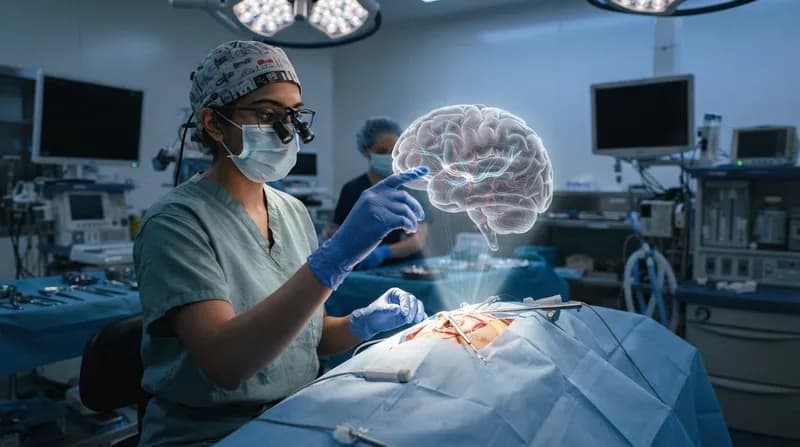
Neurosurgery presents a uniquely high-stakes environment where surgeons must balance the aggressive removal of malignant tumors with the absolute necessity of preserving a patient's neurological integrity. Central to this process is intraoperative brain mapping, a delicate procedure where medical teams stimulate specific cortical areas to identify regions responsible for speech, motor control, and higher-order cognition. Until now, managing the massive influx of data generated during these moments—ranging from patient responses to electrical stimulation results—has been a manual and logistically cumbersome task.
BrainMapp Software Solutions, a spinoff from the Autonomous University of Barcelona and the Center for Computer Vision (CVC), is changing this paradigm. By integrating advanced software directly into the operating room, the system provides a centralized digital environment that allows surgeons to capture, organize, and visualize critical mapping data in real time. This ensures that the decision-making process is supported by accurate, immediately accessible information, significantly reducing the cognitive load on the surgical team during high-pressure procedures.
How BrainMapp Enhances Clinical Outcomes
The BrainMapp platform operates as a sophisticated workstation integrated directly into the neurosurgical theater. Its primary function is to synthesize diverse data streams—including real-time audio and video feeds of patient responses, stimulation logs, and pre-operative neuroimaging data like MRI scans—into a unified, coherent digital record. This capability allows medical teams to compare live surgical findings against established structural scans, enabling a far more precise understanding of individual brain architecture during the operation.
Beyond immediate procedural assistance, the system serves as a long-term research asset. By creating structured, digitized records of every surgery, the platform enables medical institutions to analyze trends and patient outcomes with greater statistical depth. This collaborative foundation, built by experts from IDIBELL and Bellvitge University Hospital, ensures that the software is not merely a technical tool but a clinical solution tailored to the specific, nuanced requirements of modern oncology and neurology teams.
The Future of Surgical Intelligence
To date, BrainMapp has been successfully utilized in 31 neurosurgical procedures, demonstrating both its reliability and its clinical potential. The software’s current iteration focuses primarily on mapping superficial cortical areas, but the development team is already looking toward the next frontier. Future updates are expected to expand the platform's capabilities to include the mapping of deeper brain structures, coupled with enhanced AI-driven decision-support tools designed to further sharpen the surgeon’s focus.
The trajectory of BrainMapp represents a successful model of knowledge transfer, moving from theoretical research within university labs to a validated, commercial-grade technology. With participation in specialized deep-tech accelerators and ongoing partnerships with major medical centers across Spain, the company is positioning itself to become a standard component of modern neurosurgical suites. As the technology matures, it promises to transform brain surgery from an exercise in high-risk navigation into a data-informed, precision-focused procedure, ultimately improving the quality of life for patients undergoing life-saving brain tumor resections.
Why it Matters
- Enhanced Precision: Reduces the risk of accidental damage to eloquent brain areas during tumor resection.
- Data Integration: Consolidates disparate data points—MRI images, patient responses, and stimulation results—into one coherent interface.
- Knowledge Continuity: Provides a digital repository that improves both surgical outcomes and long-term medical research.
- Scalability: By automating the organization of intraoperative data, it simplifies complex surgical workflows for teams globally.