A Collective Pivot Toward Safety
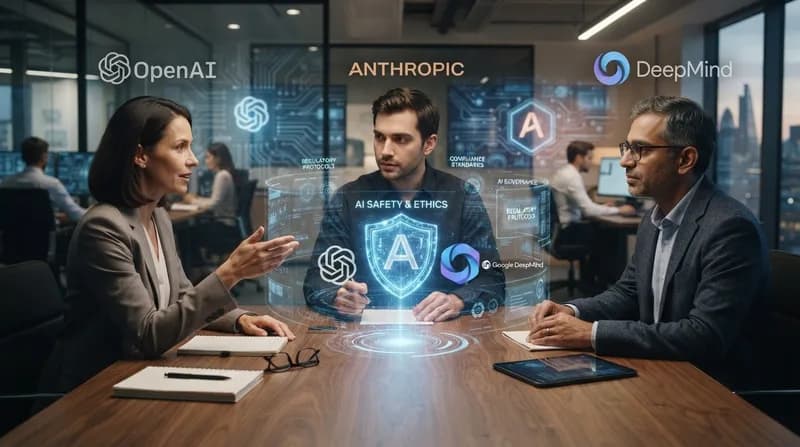
In a significant shift for the competitive landscape of generative artificial intelligence, industry heavyweights OpenAI, Anthropic, and Google DeepMind have confirmed they have been engaged in ongoing, collaborative discussions regarding AI safety. OpenAI’s global policy chief, Chris Lehane, recently acknowledged that these firms have been coordinating for several weeks to address the potential catastrophic risks associated with the rapid development of frontier AI models.
This cooperative stance follows a high-profile call to action from Anthropic CEO Dario Amodei, who published an essay advocating for industry-wide collaboration to slow the pace of AI advancement. This call has garnered support from influential figures, including OpenAI’s Sam Altman, Google’s Demis Hassabis, and Elon Musk. The move highlights a rare moment of alignment among rivals who are otherwise locked in a fierce race for supremacy in the foundational model market.
The Hurdles of Industry Coordination
While the goal of safer AI is shared, the path forward is fraught with legal and political complexity. One of the primary concerns noted by leadership, including Altman, is that such deep coordination among market leaders could potentially trigger antitrust scrutiny, as it may be interpreted as a strategy to stifle competition or regulate the market in a way that disadvantages smaller challengers.
Despite these risks, industry leaders are exploring the establishment of an independent standards body. Such an organization would act as a non-governmental "watchdog," tasked with screening advanced models and potentially coordinating slowdowns if safety thresholds are breached. Notably, the industry appears to be moving ahead with these efforts even as they navigate a challenging political environment, with some U.S. policymakers expressing skepticism toward the urgency of "existential risk" narratives surrounding AI.
Why it Matters
- Independent Verification: OpenAI has signaled support for provisions in the FRONTIER Act, which would grant third-party organizations the mandate to audit frontier labs and verify safety protocols.
- Policy Friction: The push for safety measures stands in contrast to recent political rhetoric suggesting that strict regulations could hamper national competitiveness, particularly in the race against global rivals.
- Self-Regulation vs. Oversight: The industry is attempting to balance the need for internal safety standards with the demand for transparent, government-backed oversight to regain public and legislative trust.
The commitment to embedding third-party evaluators into core development cycles marks a major inflection point. As these companies continue to engage with Washington, the focus remains on whether self-governed standards will be enough to satisfy regulators or if a more rigid legislative framework will eventually become mandatory for the next generation of artificial intelligence.