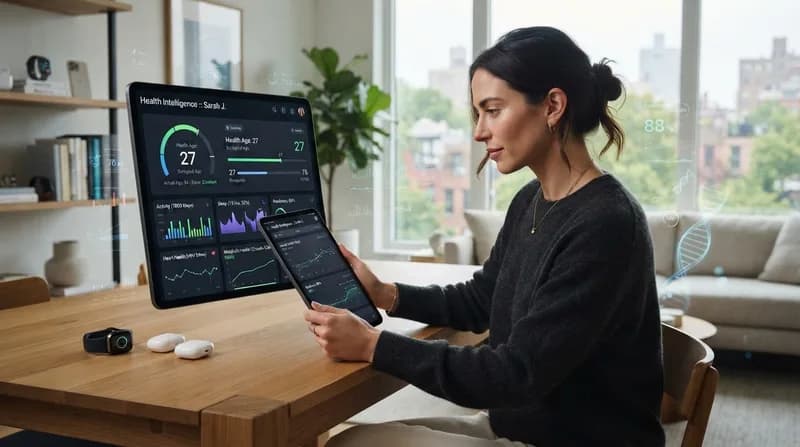
The New Era of AI-Driven Wellness
Apple has unveiled a comprehensive redesign of its Health app, timed to coincide with the launch of the Apple Watch Series 12 and Ultra 4. By integrating Apple Intelligence into the core of the experience, the company is shifting the app from a passive data repository into an active, analytical health coach. The update focuses on synthesizing fragmented biometric data into actionable insights, providing users with a clearer picture of their long-term vitality.
Central to this update is the new Insights tab, which utilizes generative AI to offer personalized guidance based on current trends in a user's fitness and recovery patterns. Rather than simply displaying raw numbers, the app interprets data to provide specific suggestions, such as recommending high-intensity interval training to bolster cardiovascular performance. This contextual awareness ensures that users receive advice tailored to their specific physiology and activity levels.
Readiness and Health Age Scoring
Two of the most significant additions are the 'readiness' score and the 'Health Age' computation. The readiness score is designed to help users gauge how much strain their body can handle on any given day, effectively balancing exertion with recovery. This feature synthesizes sleep quality, heart rate variability, and recent physical activity to prevent overtraining and burnout.
The 'Health Age' metric serves as a novel benchmarking tool, comparing an individual’s biometric data against global health standards. By aggregating information such as VO2 max, resting heart rate, and sleep quality, the app calculates how your internal metrics align with your biological age. By incorporating lab results—including a new 50-biomarker panel developed in partnership with Quest—the app provides a more holistic view of systemic health than ever before.
Longevity and Mobility Assessments
The introduction of a dedicated Longevity tab reflects Apple’s increased focus on long-term health management. This section serves as a centralized hub for tracking trends in movement, heart health, and recovery. By correlating user data with clinical-grade lab insights, the platform encourages users to take a proactive approach to aging and chronic condition management.
Furthermore, the app now features sophisticated movement assessments. These tools are designed to evaluate physical performance and stability, offering guided sessions led by virtual trainers. This functionality is particularly beneficial for elderly users or those undergoing physical therapy, as it provides real-time feedback on form and range of motion. The update is slated for release later this year, initially supporting U.S. English users as the primary launch market.