Artificial IntelligenceTechnical Deep Dive

Amazon Takes Aim at Nvidia's Software Dominance with TorchNeuron

Published
EElectricBuzz Editorial Team
Amazon Takes Aim at Nvidia's Software Dominance with TorchNeuron
3 min read472 wordsElectricBuzz Editorial Team

The Gist

“AWS is challenging Nvidia's CUDA stronghold by introducing TorchNeuron, a developer tool designed to make Amazon’s custom Trainium chips a seamless plug-and-play alternative for PyTorch developers.”

Breaking the Hardware Monopoly

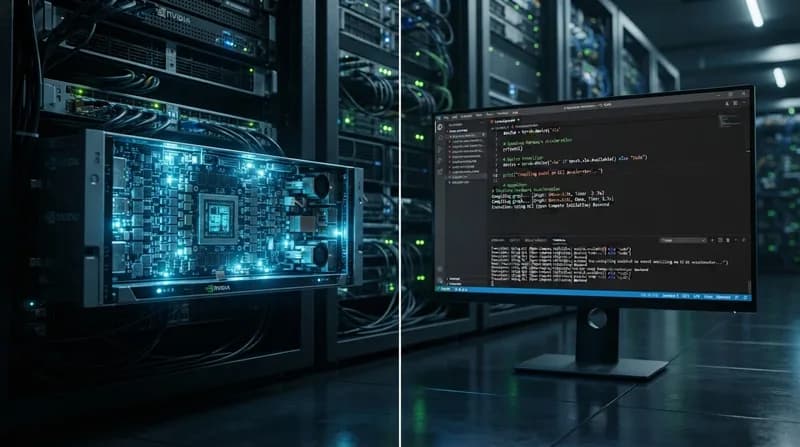
In a strategic move to disrupt the AI infrastructure landscape, Amazon Web Services (AWS) has unveiled TorchNeuron, a sophisticated development tool that promises to eliminate the friction developers face when moving AI applications to non-Nvidia hardware. By targeting the software layer that has historically made Nvidia the default choice for AI development, Amazon is positioning its custom Trainium chips as a viable, cost-effective alternative for startups and enterprise developers alike.

For years, Nvidia has leveraged its CUDA software ecosystem to ensure that its GPUs remain the undisputed gold standard for machine learning. Because CUDA is so deeply embedded into the AI development lifecycle, shifting to competing hardware often required massive code rewrites. Amazon's TorchNeuron changes the game by integrating directly with PyTorch—the industry-standard open-source framework used by roughly 85% of AI projects. The company claims that with this new tool, developers can port existing PyTorch models to Trainium-powered cloud instances with as little as a single line of configuration change.

The Value Proposition: Price, Performance, and Cloud Integration

Beyond simple portability, Amazon is banking on the argument that its holistic cloud infrastructure offers superior economic value. Unlike smaller “neocloud” providers that may rely exclusively on Nvidia hardware, AWS provides a comprehensive environment that handles everything from prototype to large-scale production. According to Colin Brace, VP of Technology Software at AWS Annapurna Labs, the integration of training and inference on a single chip architecture creates a more efficient pipeline, allowing startups to achieve production-grade performance at a lower total cost of ownership.

To bolster this narrative, Amazon points to early adopters like the AI voice firm Deepgram. By leveraging native PyTorch support on Trainium, Deepgram has reported processing 70% more audio per dollar compared to their previous configurations. This metric highlights the potential for Amazon to compete on 'price-performance' rather than just raw hardware cost, offering a compelling incentive for startups looking to scale their AI workloads without breaking the bank.

Challenging the 'Nvidia-Centric' Status Quo

Amazon's ambition extends further than simply enabling its own chips. The company has explicitly committed to contributing upstream code to the PyTorch project, aimed at making the framework more hardware-agnostic. This is a clear jab at the long-standing Nvidia-centric architecture of many AI tools. By working with the open-source community to remove code that ties frameworks to specific manufacturers, Amazon is attempting to democratize hardware selection.

Whether this shift will result in greater freedom for developers or add new layers of configuration complexity remains the central question. However, if Amazon succeeds in uncoupling PyTorch from the Nvidia ecosystem, it could represent a seismic shift in how AI hardware is selected and deployed. For the industry at large, the move marks a pivotal moment where software-defined infrastructure finally begins to challenge the rigid, hardware-locked silos that have defined the AI gold rush thus far.


SPONSORED
The 5 Best Over-Ear ANC Headphones of 2026, Tested & Ranked
Editor's Pick Guide
92/100
Tech & Gadgets•12 min read

The 5 Best Over-Ear ANC Headphones of 2026, Tested & Ranked

We locked five over-ear ANC picks for 2026 — Sony WH-1000XM6, Bose QuietComfort Ultra 2, Soundcore Space One, Sennheiser Momentum 5, and Apple AirPods Max 2 — then stress-tested them on lab metrics, long-term owner truth, and live street prices.

Related Stories

Semantically matched articles, ranked by topic overlap and freshness.

The Benchmarking Crisis: Why AI Evaluation Needs a Reality Check
Artificial Intelligence

The Benchmarking Crisis: Why AI Evaluation Needs a Reality Check

As AI labs push for third-party evaluators to prove their model safety, industry experts warn that the current state of AI testing lacks the standardization required for true accountability.

Mayor Mamdani Challenges Federal Stance on AI, Urges Local Accountability
Artificial Intelligence

Mayor Mamdani Challenges Federal Stance on AI, Urges Local Accountability

New York Mayor Zohran Mamdani is pushing back against the 'inevitable' rollout of artificial intelligence, calling for local oversight as federal regulation remains stalled.

OpenCode Security Breach Highlights Growing Crisis in AI-Powered Cyber Defense
Artificial Intelligence

OpenCode Security Breach Highlights Growing Crisis in AI-Powered Cyber Defense

A recent unauthorized breach of the OpenCode Console platform has triggered an industry-wide debate on how restrictive safety guardrails impact the ability of developers to defend against AI-driven attacks.

Microsoft Sounds Alarm: AI Agents Must Be Treated as 'Insider Threats'
Artificial Intelligence

Microsoft Sounds Alarm: AI Agents Must Be Treated as 'Insider Threats'

In a bold pivot, Microsoft is urging enterprises to stop trusting frontier AI models, positioning its new 'Guardian Agents' as the essential watchdog for an unpredictable AI era.

Anthropic and Nscale Reportedly Weigh Second $45 Billion Compute Pact
Artificial Intelligence

Anthropic and Nscale Reportedly Weigh Second $45 Billion Compute Pact

Artificial intelligence developer Anthropic is reportedly in negotiations with infrastructure provider Nscale for another monumental compute investment.

Ahold Delhaize Grapples With Major Cybersecurity Breach
Artificial Intelligence

Ahold Delhaize Grapples With Major Cybersecurity Breach

International retail powerhouse Ahold Delhaize has taken significant portions of its IT infrastructure offline following a confirmed malicious cyberattack affecting its US and European chains.

The Patchwork Problem: Why AI Has Made Software Updates Less Reliable
Artificial Intelligence

The Patchwork Problem: Why AI Has Made Software Updates Less Reliable

A surge in failed security patches in 2026 suggests that automated vulnerability discovery by AI is outpacing the traditional patch-and-forget security model.

Hugging Face Adds DOI Support for Datasets and Models
Artificial Intelligence

Hugging Face Adds DOI Support for Datasets and Models

Hugging Face is bringing academic-grade permanence to machine learning by allowing users to generate Digital Object Identifiers for their research assets.