The Shift Toward Ambient Intelligence
Amazon is steering its hardware division toward a radical new philosophy: ambient computing. Panos Panay, SVP of Devices, Alexa, and Leo at Amazon, recently articulated a vision of a future where users no longer need to actively manage apps to accomplish daily tasks. According to Panay, the current model of mobile computing is reactive and cumbersome, requiring users to constantly remember which tool or application to open to solve a specific problem. Instead, he envisions a world where devices operate quietly in the background, utilizing sensors and real-time AI to anticipate needs before they are explicitly requested.
This shift represents a fundamental change in the relationship between humans and their hardware. By minimizing the friction of the 'point, shoot, return' cycle—where a user picks up a device to perform a singular task—Amazon hopes to foster a more present and fluid user experience. The goal is to allow individuals to spend less time managing their devices and more time interacting with the physical world, confident that their technology is handling the heavy lifting of administrative or logistical tasks behind the scenes.
The Bee Ecosystem: Wearables and Magnetic Add-ons
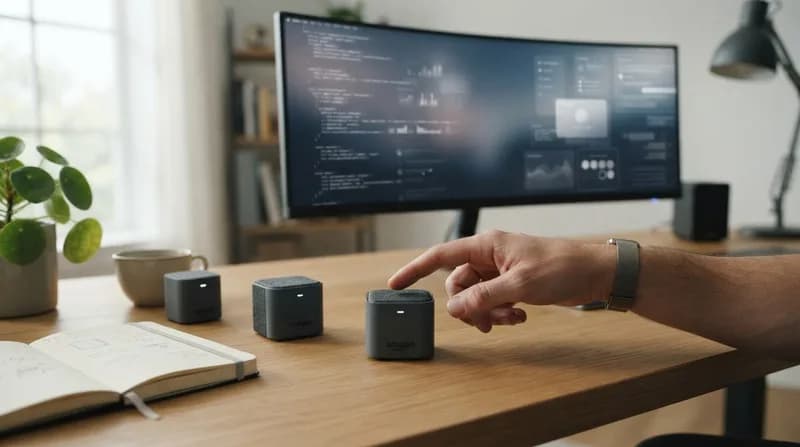
At the center of this strategy are the new 'Bee' devices, a hardware lineup designed to bridge the gap between intent and action. The collection features two distinct form factors: a versatile wearable that functions as a wristband or a pendant, and a compact, credit-card-sized peripheral that attaches magnetically to the rear of an existing smartphone. These devices are intentionally low-profile, intended to capture information seamlessly without requiring the user to stare at a screen.
Functionally, the Bee hardware focuses on passive data collection. By recording audio and extracting key reminders, action items, and conversational insights, these devices act as an intelligent layer above the user’s standard smartphone experience. Instead of forcing the user to transcribe meetings or manually log notes into an app, the hardware processes the information and organizes it automatically, aiming to make digital organization almost invisible to the end user.
Privacy as a Foundational Architecture
Recognizing the inherent sensitivities of an 'always-listening' or ambient device, Amazon has integrated privacy protocols directly into the Bee hardware’s core architecture. Panay emphasized that the devices are designed to process audio streams in real-time, deliberately avoiding the long-term storage of raw audio data. Once the necessary context is extracted, the raw audio is discarded, leaving only encrypted transcripts that the user controls.
These transcripts are protected by user-generated keys, ensuring that even Amazon personnel cannot access or view the content of these personal interactions. This privacy-first engineering is not merely an optional feature but a critical requirement for gaining user trust in the ambient computing space. As Amazon pushes deeper into personal AI, the company acknowledges that maintaining this level of security is essential for the long-term adoption of devices that sit so closely to the user’s private life.
Why It Matters
The introduction of the Bee devices marks a significant turning point in consumer hardware strategy. If successful, this ecosystem could diminish the dominance of the application-based mobile economy. Panay suggests that a coming generation of users may eventually find the 'open an app' model outdated, preferring instead an intuitive interface where the device simply 'understands' the context of their day. While the smartphone will remain a vital piece of the hardware stack, Amazon’s focus is on the intelligence layer that connects disparate devices, effectively turning the surrounding environment into a responsive, helpful assistant.