E-BUZZ ME Logo
ScienceTechnical Deep Dive

AI-designed E. coli Killer Revolutionizes Fight Against Antibiotic-Resistant Bacteria

Published
AI-designed E. coli Killer Revolutionizes Fight Against Antibiotic-Resistant Bacteria
1 min read97 words

The Gist

Scientists are leveraging AI to engineer bacteriophages, lethal killers of bacteria, as a potential solution to the growing concern of antibiotic-resistant bacteria. By modifying phage DNA, researchers aim to develop innovative antibiotics, offering a promising alternative to traditional treatments.

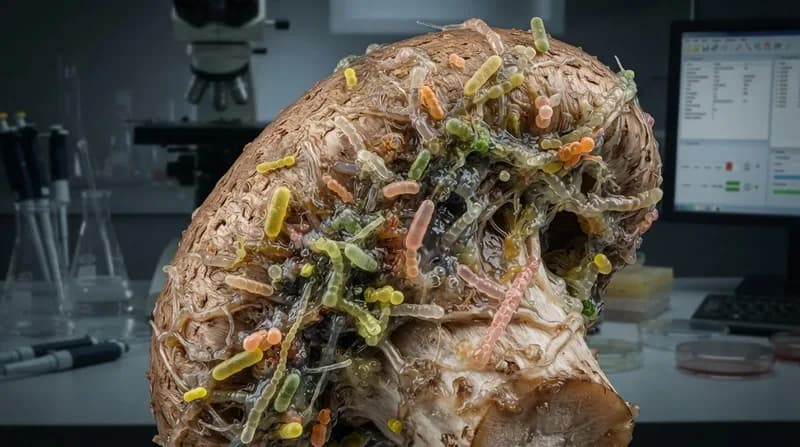
The rise of antibiotic-resistant bacteria has become a pressing global health issue, prompting scientists to explore novel approaches to combat these superbugs. One such approach involves the use of bacteriophages, viruses that specifically target and kill bacteria, which can be engineered using AI to enhance their efficacy.

Key Insights

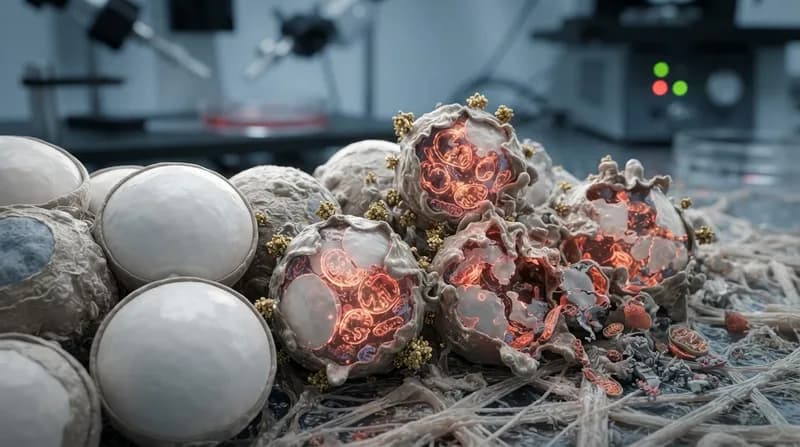
Bacteriophages are naturally occurring viruses that infect and kill bacteria, making them an attractive candidate for developing new antibiotics. By engineering phage DNA, researchers can create customized bacteriophages designed to target specific strains of antibiotic-resistant bacteria, potentially providing a powerful tool in the fight against these deadly pathogens.

Related Stories

Semantically matched articles, ranked by topic overlap and freshness.

Europe’s Wildfires Became So Intense They Created Their Own Storm
Science

Europe’s Wildfires Became So Intense They Created Their Own Storm

Historic wildfires in Spain and France have scorched huge areas, forcing hundreds of thousands to evacuate and destroying homes. The fires, fueled by severe heat, drought, and strong winds, have created rare fire clouds, including a pyrocumulonimbus in France.

Weedkiller Disrupts Honeybee Brains: Glyphosate's Alarming Impact
Science

Weedkiller Disrupts Honeybee Brains: Glyphosate's Alarming Impact

Researchers at Virginia Tech have found that glyphosate, a widely used herbicide, can interfere with honeybee foraging and may undermine the long-term stability of colonies. Exposed bees showed a 13 percent decline in foraging activity after only three days, suggesting a disturbing impact on their neurochemical balance.

Atlantic Ocean Current Defies Expectations, Stays Strong Despite Weakened Lifeline
Science

Atlantic Ocean Current Defies Expectations, Stays Strong Despite Weakened Lifeline

New research reveals that the Atlantic Meridional Overturning Circulation (AMOC) can remain strong even when the Agulhas Leakage, a major ocean lifeline, weakens, challenging traditional assumptions about their relationship. The study's findings suggest that the AMOC can adapt to climate changes, contrary to long-held scientific beliefs.

Elite Athletes' Mental Health in Spotlight
Science

Elite Athletes' Mental Health in Spotlight

The International Olympic Committee has called for routine mental health screening for elite athletes, citing high prevalence of mental health issues in this group. The move aims to establish a standardized approach to managing mental health in elite athletes, extending support beyond individual management to training environments and organizational culture.

AI Cracks 87-Year-Old Math Conjecture with Tiny Formula
Science

AI Cracks 87-Year-Old Math Conjecture with Tiny Formula

The Claude Fable 5 AI model has discovered a counterexample to the Jacobian conjecture, a longstanding math problem that has puzzled mathematicians for over a century. This breakthrough reveals that the conjecture is false in three dimensions and above, although the two-dimensional version remains unsolved.

Excess-Death Paper Retracted Over Misinformation Concerns
Science

Excess-Death Paper Retracted Over Misinformation Concerns

A widely covered excess-death paper has been retracted by the BMJ Group due to concerns over misinformation about the possible reasons for excess mortality. The paper's findings, which were widely reported in the media, were found to have limited original work and misleading conclusions.

Protein Secreted by Immune Cells May Accelerate Brain Aging
Science

Protein Secreted by Immune Cells May Accelerate Brain Aging

Researchers at Weill Cornell Medicine have identified a protein called DLK1, secreted by immune cells in the brain, which may contribute to brain aging and increased risk of neurodegenerative diseases. The discovery sheds light on the potential mechanisms driving brain aging and could lead to new therapeutic strategies for age-related brain disorders.

Cell-inspired Nanoreactor Turns Sunlight into Hydrogen Peroxide
Science

Cell-inspired Nanoreactor Turns Sunlight into Hydrogen Peroxide

Researchers have developed a cell-mimicking nanoreactor that efficiently produces hydrogen peroxide using visible light, offering new possibilities for cleaner chemical manufacturing. This innovation could pave the way for more efficient artificial photosynthesis methods, leveraging sunlight to create valuable chemicals.