The Vision of a Digital Domesday
In the mid-1980s, the BBC launched one of the most ambitious archival projects in history: the Domesday Project. Designed as a modern, electronic counterpart to William the Conqueror's 11th-century survey of England, the project sought to create a comprehensive snapshot of British life. Spanning 1984 to 1986, it relied on the collective effort of over a million contributors, including school children and local residents, to catalog geography, culture, and daily life through photographs, maps, and text.
To celebrate the project's 40th anniversary, the UK's Centre for Computing History recently brought together key members of the original production team. Speakers, including Mike Tibbetts, shared behind-the-scenes insights into how the project navigated the skepticism of politicians and even the bewilderment of intelligence services, who were reportedly unsure of the implications of such massive data collection.
Hardware and Architecture
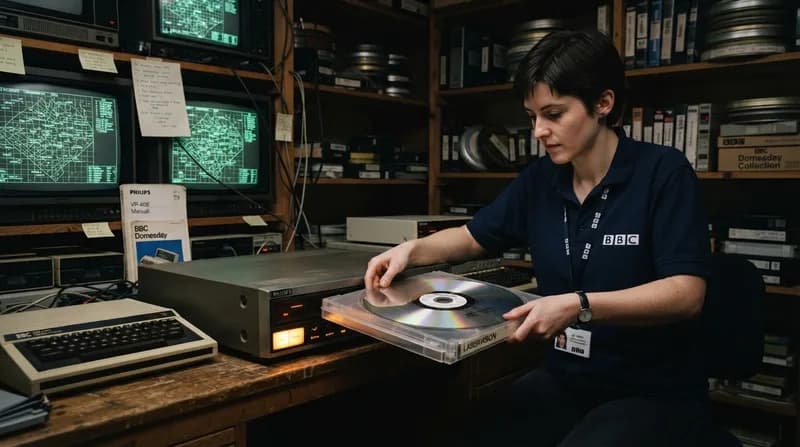
The Domesday Project was a marvel of 1980s engineering, requiring a sophisticated hardware stack that pushed the limits of available technology. At the heart of the system was the Acorn BBC Master computer, which acted as the interface and processing hub. To handle the unprecedented volume of visual and textual data, the system utilized a specialized Philips VP415 LaserVision player.
This hardware setup, often paired with a Marconi RB2 trackerball for navigation, enabled users to interact with a library of two distinct LaserDiscs: the 'Community Disc' and the 'National Disc.' The system was designed to interleave video with digital data, a feat that required the team to essentially invent their own authoring and playback systems from scratch, as commercial standards had not yet caught up to the project's requirements.
The Longevity Challenge
Despite its brilliance, the Domesday Project serves as a poignant reminder of the volatility of digital media. While the original 1066 Domesday Book exists on durable vellum, the digital version faced immediate challenges due to the rapid evolution of consumer hardware. The reliance on bespoke LaserDisc technology and specific proprietary players meant that once those devices became obsolete, accessing the data became a significant technical hurdle.
Reflecting on these challenges, team members noted that while the original Domesday took centuries to be fully appreciated by historians, the digital archive requires active, ongoing curation to survive. Even with the cost of the system reaching around £5,000 at the time—a price that kept it largely within the walls of schools and libraries—the project stands as an essential, if fragile, record of the 20th century that modern digital preservation efforts are still working to safeguard today.
Why It Matters
- Technological Pioneer: It was one of the earliest examples of interactive multimedia, combining video, text, and maps years before the commercial web.
- Cultural Heritage: By aggregating content from a million citizens, it created a unique ethnographic snapshot of Britain in the 1980s.
- The Preservation Gap: The project remains a textbook example of the 'digital dark age,' illustrating why hardware-dependent formats are difficult to keep alive without emulation or digitization.