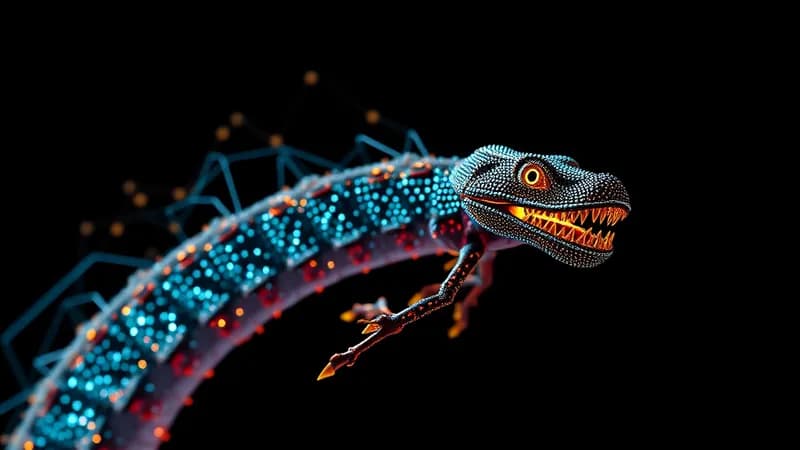
The field of artificial intelligence has seen a significant advancement with the introduction of Visual Salamandra, a multimodal model designed to bridge the gap between computer vision and natural language processing. By integrating sophisticated visual encoders with large language model architectures, the system demonstrates a high level of proficiency in understanding complex scenes and technical imagery.
Enhanced Multimodal Capabilities
Visual Salamandra excels at tasks that require simultaneous processing of visual and textual inputs. Unlike traditional models that often struggle with the spatial relationships between objects, this new architecture utilizes a refined attention mechanism to maintain context across different data types. This allows the model to provide more accurate descriptions, answer visual queries with higher precision, and even assist in specialized technical fields like medical imaging or engineering schematics.
Implications for the AI Ecosystem
The release of Visual Salamandra marks a shift toward more versatile AI agents. By pushing the boundaries of multimodal understanding, developers are paving the way for more intuitive human-computer interactions. The model's ability to reason over visual data suggests that future iterations could lead to more autonomous systems capable of navigating and interpreting the physical world with minimal human intervention.