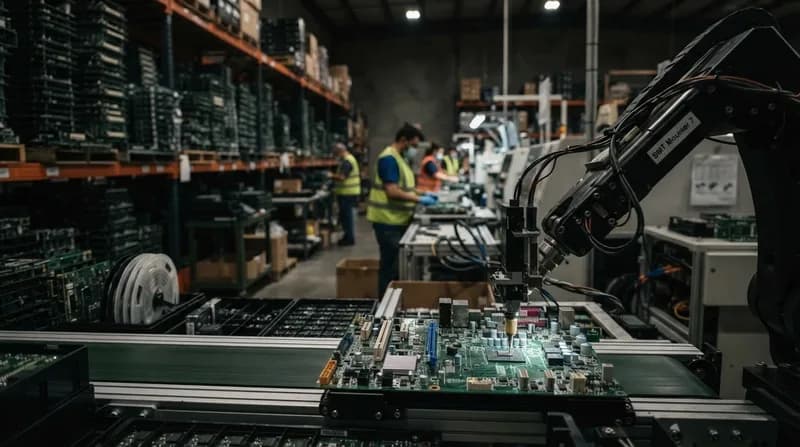
Strategic Shifts in Semiconductor Regulation
As part of a broader strategy to maintain technological superiority, the US administration has introduced stringent new export restrictions specifically targeting Southeast Asia. This region, which has rapidly evolved into a critical nexus for data center infrastructure and high-end chip assembly, now sits at the center of a geopolitical tug-of-war aimed at curbing China's access to cutting-edge computing power.
These latest measures are designed to close potential loopholes that have allowed advanced semiconductors—specifically those powering AI and high-performance computing—to be re-routed through regional intermediaries. By enforcing stricter end-user verification and broadening the scope of hardware categories subject to oversight, Washington is attempting to insulate the global supply chain from strategic adversaries.
Why it Matters
- Supply Chain Fragility: Southeast Asia currently hosts significant operations for global chip giants, making these rules a major operational pivot for data center logistics.
- Preventing Leakage: The policy aims to ensure that high-end chips—the engines behind modern AI research and cloud infrastructure—do not land in the hands of prohibited entities.
- Geopolitical Posture: With high-level diplomatic visits coinciding with these announcements, the signal to international partners is clear: chip sovereignty is now a pillar of US national security.
The impact of these regulations is expected to be immediate. Hardware manufacturers operating within Southeast Asian data centers must now navigate a more complex compliance landscape, ensuring that every GPU or high-speed processor is accounted for within their regional architecture. For the tech industry, this represents the next phase of a "de-risking" strategy that prioritizes national security over the frictionless globalized trade models of the past decade. As Washington pushes for greater transparency, the industry must prepare for a future where hardware localization is dictated as much by policy as it is by engineering efficiency.