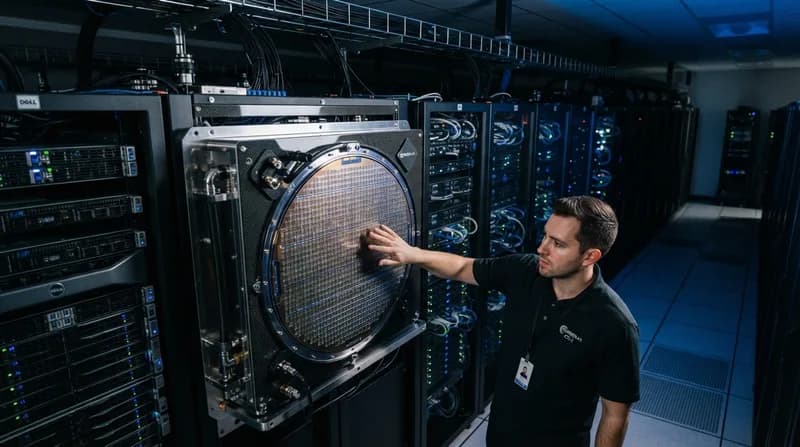
Challenging the Silicon Status Quo
The relentless trajectory of AI development has brought us to a critical junction where the hunger for raw computing power threatens to outstrip current infrastructure capabilities. For years, the industry has operated under the assumption that increasing AI performance is simply a matter of packing more conventional chips into larger clusters. However, Andrew Feldman, CEO and co-founder of Cerebras Systems, has spent the last decade questioning this paradigm. Instead of fragmenting silicon into standard processors, Cerebras has championed the concept of wafer-scale computing, utilizing the entire silicon wafer as a single, massive engine optimized for the unique, heavy-duty workloads of modern artificial intelligence.
This unconventional approach is now being put to the ultimate test as Cerebras scales its operations to meet unprecedented global demand. Following a successful $5.5 billion IPO earlier this year, the company is aggressively expanding its footprint, marked by a significant multiyear commitment to provide OpenAI with 750 megawatts of specialized AI compute capacity through 2028. This partnership, coupled with the recent introduction of the CS-4—the fourth iteration of their wafer-scale system—positions Cerebras as a critical player in the fight against the looming hardware wall.
The Physical Constraints of Digital Intelligence
Scaling AI is no longer just a design challenge for chip architects; it has evolved into a massive logistical and engineering hurdle involving energy grids, cooling systems, and specialized data center construction. Feldman emphasizes that the most powerful processors on the planet are useless without the physical infrastructure to support them. In response to these constraints, Cerebras is moving rapidly to secure physical resources, reporting over 600 megawatts of data center capacity currently operational or under contract for completion by late 2027.
This build-out includes a significant focus on international expansion, with plans to bring the company’s first European data center online this year, scaling toward a 200-megawatt capacity in the region by the end of 2027. By increasing manufacturing output more than tenfold throughout 2026, Cerebras is attempting to solve the supply-side bottleneck that plagues many AI hardware providers. The company’s trajectory suggests that the next phase of the AI revolution will be defined as much by electricity transmission and heat management as it is by neural network architecture.
Why It Matters
- Beyond Moore’s Law: Traditional chip manufacturing may eventually hit physical limits; wafer-scale designs offer an alternative path to sustained performance growth.
- Energy Infrastructure: AI expansion is now tethered to the availability of massive power grids, forcing tech companies to become utility-adjacent players.
- Sustainability and Efficiency: As AI models grow larger, finding energy-efficient ways to train them is the primary driver for both cost reduction and environmental viability.
As the industry gathers at TechCrunch Disrupt 2026, the conversation around AI scaling is shifting from software benchmarks to the hard realities of power and silicon production. Feldman’s insights into this transition represent a crucial perspective for anyone involved in the deployment, funding, or development of large-scale AI systems, highlighting the inevitable limits of existing hardware and the infrastructure required to push past them.