The End of a Dangerous Illusion
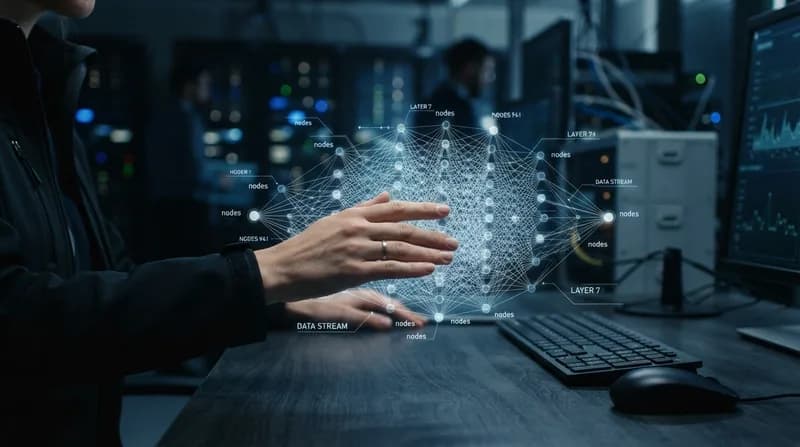
For decades, many organizations relied on 'security through obscurity'—the assumption that if an architecture, protocol, or vulnerability remained hidden, the system would remain safe. It was a strategy born more from complacency and resource constraints than from sound engineering. Today, that facade has been shattered. The rise of sophisticated AI agents has rendered this approach completely obsolete, as these models can now ingest, analyze, and reverse-engineer legacy codebases and proprietary architectures at a speed and scale previously unimaginable.
The impact is being felt across the entire software supply chain. Recently, AI-powered bug-hunting tools have unearthed decades-old flaws in widely used open-source libraries that the industry previously believed were hardened by years of community testing. Federal cybersecurity officials have confirmed that even the most 'obscure' protocols, such as legacy Unix-based systems or Vista-era network maps, are now transparent to any attacker leveraging generative models. The barrier to entry for exploiting these systems has dropped precipitously; one no longer needs deep domain expertise in an antiquated protocol to craft a weaponized exploit—they simply need to prompt an AI.
The Critical Vulnerability of Industrial Infrastructure
The danger is most acute regarding Operational Technology (OT) and Industrial Control Systems (ICS). These are the systems that govern the physical world: power grids, water treatment plants, and manufacturing facilities. Historically, these systems were protected by their 'black box' nature, relying on proprietary hardware that very few people understood. Now, AI has essentially democratized the ability to attack these critical systems.
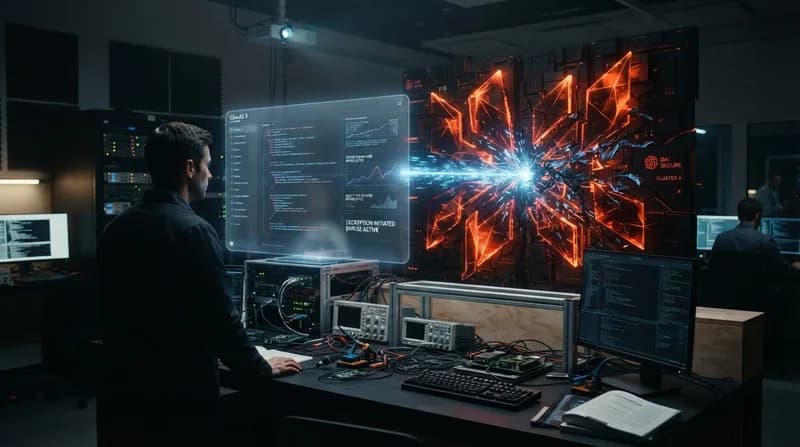
Recent intelligence reports from U.S. agencies highlight that bad actors are already using AI-generated exploitation scripts to breach internet-exposed Programmable Logic Controllers (PLCs). Because these models can act as expert guides, they can walk an attacker through firmware analysis and system troubleshooting with ease, even if the attacker has never seen the specific controller before. This transition from theoretical risk to active threat has placed an immense burden on facility operators who were never designed to be on the front lines of a high-tech, AI-enabled cyber war.
The Defensive Gap: A Reality Check
While AI is currently a superpower for attackers, its utility on the defensive front remains in its infancy. Industry experts point out a dangerous asymmetry: while AI is exceptional at finding bugs, it is remarkably poor at fixing them safely. Recent studies by security firms and research teams have shown that AI-generated patches frequently fail to resolve the core vulnerability, and in many cases, introduce entirely new, unintended security flaws or break application functionality.
Why it Matters
- Automation Trap: Organizations currently lack automated, reliable remediation. Depending on AI for patching often leads to 'process failure' where companies chase bugs on a treadmill rather than fixing root causes.
- Knowledge Democratization: The 'specialized' knowledge required to hack proprietary industrial hardware is now available to anyone via LLMs.
- Strategic Shift: The industry must move away from counting 'bugs fixed' and toward structural improvements, such as adopting safer coding templates at the CI/CD pipeline level to prevent entire classes of vulnerabilities from being created in the first place.
The consensus among top cybersecurity researchers is that throwing more human labor at patching is no longer a viable long-term strategy. Instead, firms must pivot toward dynamic, process-driven security models. Relying on the hope that a system is too niche to be targeted is no longer an option. In an era where AI can scan the entire digital footprint of an organization in moments, transparency, robust architecture, and proactive prevention have become the only metrics that truly matter.