The Allegations of Distillation
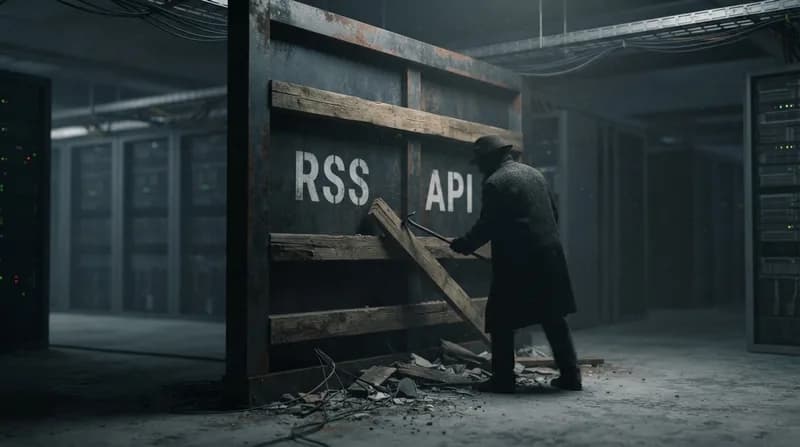
OpenAI recently disclosed that it successfully disrupted a systematic effort to extract its proprietary model reasoning. According to the company, the campaign, which spanned the month of July, utilized a technique known as "model distillation." This process involves sending high volumes of targeted queries to an AI model to capture its outputs and internal logic, which can then be used to train a rival, smaller, or "cheaper" model without the immense R&D costs associated with building the original architecture.
OpenAI reports that the operation was not a traditional data breach—no encryption was bypassed, and no databases were accessed. Instead, the attackers manipulated user interactions on a massive scale, utilizing over 4,000 specific user accounts to generate spikes of up to 16,000 requests. The company identified a "core cluster" of activity linked to Moonshot AI, a prominent Chinese developer behind the Kimi model series, although it noted that multiple actors may have been involved in the broader campaign.
Why It Matters
This incident strikes at the heart of the ongoing geopolitical battle for AI supremacy. As American labs invest billions into training frontier models, the ability of foreign competitors to "distill" that knowledge poses a unique strategic challenge. The primary concern is not just the loss of competitive advantage; it is the erosion of safety guardrails. When a model's reasoning is distilled, the safety protocols built into the original, highly regulated US model are often stripped away, potentially allowing developers to bypass the rigorous safety testing mandated by Western standards.
- Safety Risks: Distilled models lack the original's safety layer, potentially enabling malicious "dual-use" capabilities.
- Economic Impact: Distillation allows rivals to leapfrog years of development and capital expenditure, undermining the business models of AI labs.
- Regulatory Response: Government officials are increasingly framing model distillation as a direct threat to national security, prompting closer collaboration between industry leaders and the state.
Countermeasures and Defensive Strategy
In response to the July campaign, OpenAI has significantly bolstered its defensive posture. The company has implemented stricter infrastructure controls, expanded real-time monitoring of "prompt-pattern activity," and banned the specific accounts associated with the extraction attempts. Furthermore, OpenAI has moved to close technical loopholes that allowed users to replay encrypted reasoning traces, a pathway that was previously exploited to recover model outputs.
Beyond internal fixes, OpenAI is leveraging the Frontier Model Forum to share its findings with other major AI developers, including Anthropic and Google. This level of industry cooperation underscores how seriously the sector views the threat of distillation. As models become more powerful and capable in "dual-use" domains, the competition to protect the "secret sauce" of AI reasoning will likely become as intensive as the race to build the models themselves.