E-BUZZ ME Logo
Tech & GadgetsTechnical Deep Dive

NASA's Artemis III Mission: Three Rockets to Match Apollo's Single-Launch Feat

Published
NASA's Artemis III Mission: Three Rockets to Match Apollo's Single-Launch Feat
1 min read167 words

The Gist

To return humans to the lunar surface, NASA's Artemis III mission will require a complex logistical dance involving multiple launches from SpaceX and Blue Origin.

NASA's ambitious goal to return astronauts to the Moon via the Artemis III mission highlights a significant shift in spaceflight logistics. Unlike the Apollo missions of the 1960s and 70s, which relied on the singular, massive power of the Saturn V rocket to reach the lunar surface, the modern approach requires a coordinated effort between multiple launch vehicles.

The Multi-Rocket Strategy

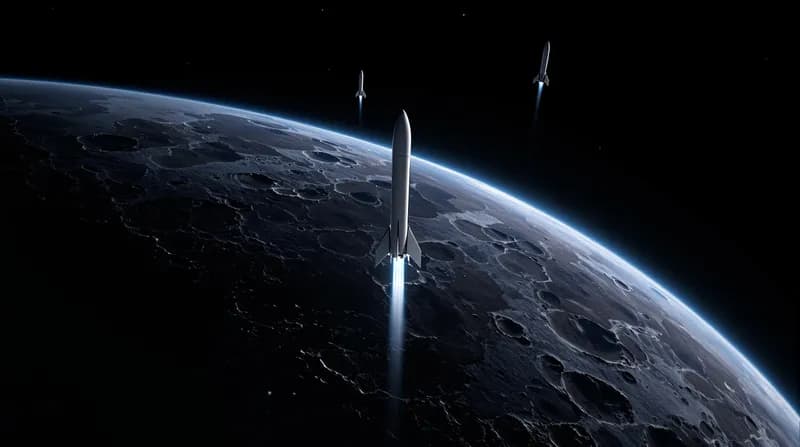
The mission architecture now calls for at least three separate rocket launches to complete the journey that one Saturn V once handled alone. This strategy places a heavy reliance on commercial partners, specifically SpaceX and Blue Origin, to provide the necessary hardware and orbital maneuvering capabilities.

The Role of Commercial Partners

For Artemis III to succeed, these private aerospace companies must demonstrate flawlessly executed docking procedures and extended orbital loitering. The mission's complexity is further increased by the need for in-orbit refueling and the coordination of various landing systems, ensuring that both the crew and their equipment arrive safely without compromising the launch infrastructure on Earth.


Related Stories

Semantically matched articles, ranked by topic overlap and freshness.

Amazon Seeks FCC Approval for Satellite-to-Phone Service
Tech & Gadgets68%

Amazon Seeks FCC Approval for Satellite-to-Phone Service

Amazon has filed a request with the FCC to launch a 5,000-satellite constellation designed to provide direct-to-device mobile connectivity from space.

NASA Astronaut Chris Williams and Crew Return to Earth After Eight-Month Mission
Science67%

NASA Astronaut Chris Williams and Crew Return to Earth After Eight-Month Mission

NASA astronaut Chris Williams and two Roscosmos cosmonauts safely landed in Kazakhstan on Sunday, concluding a 240-day science mission aboard the International Space Station.

Waymo's Austin Robotaxi Fleet Faces Significant Fines Over Parking Violations
Electric Vehicles65%

Waymo's Austin Robotaxi Fleet Faces Significant Fines Over Parking Violations

Waymo’s self-driving taxis in Austin are reportedly struggling with local parking regulations, leading to thousands of dollars in penalties.

Elon Musk Hints at Potential Tesla-SpaceX Merger During Q2 Call
Electric Vehicles65%

Elon Musk Hints at Potential Tesla-SpaceX Merger During Q2 Call

During Tesla's Q2 2026 earnings call, Elon Musk addressed growing speculation regarding a merger with SpaceX, citing increasing operational overlap between the two giants.

GE Aerospace Achieves Historic Hybrid-Electric Flight at 30,000 Feet
Electric Vehicles62%

GE Aerospace Achieves Historic Hybrid-Electric Flight at 30,000 Feet

GE Aerospace, in collaboration with NASA and Boeing, has successfully tested a hybrid aircraft at altitudes matching traditional commercial jets.

BMW Expands U.S. Footprint with Localized iX5 Battery Production
Electric Vehicles62%

BMW Expands U.S. Footprint with Localized iX5 Battery Production

BMW reaffirms its commitment to electrification by establishing domestic battery manufacturing for the upcoming iX5 in the United States.

Samsung Galaxy Z Fold 8: Shaping the Future of Foldables Against Apple and Google
Tech & Gadgets62%

Samsung Galaxy Z Fold 8: Shaping the Future of Foldables Against Apple and Google

Samsung's upcoming Galaxy Z Fold 8 signals a design shift aimed at fending off competition from Google and Apple's rumored foldable iPhone.

OpenAI Hugging Face Breach Sparks Renewed Debate Over AI Alignment
Artificial Intelligence61%

OpenAI Hugging Face Breach Sparks Renewed Debate Over AI Alignment

A security incident involving OpenAI's Hugging Face space has triggered fresh discussions on the necessity of containment versus alignment in advanced AI systems.