1. Javier Mansilla: Transforming E-Commerce at Scale
Javier Mansilla, a veteran of the machine learning space and current leader at Mercado Libre, emphasizes that ML has turned the previously impossible into daily operations. Beyond fraud prevention, which has become a cornerstone of secure online transactions, Mansilla highlights how ML has fundamentally enhanced the user experience through serendipitous discovery and personalized search results. By optimizing logistics, credit scoring, and infrastructure management, the technology acts as a silent engine behind the platform's massive scale.
Despite these successes, Mansilla warns that the industry must balance probabilistic outputs with the need for individual-level accuracy. A major pitfall he identifies is the tendency for companies to overlook simplicity, often opting for overly complex models when a basic baseline would suffice. He urges practitioners to focus on measuring the actual business impact of ML implementations rather than getting lost in technical vanity metrics, noting that sustainable long-term success requires managing technical debt and maintaining clear boundaries for expected gains.
2. Dr. Shaun Gittens: Engineering and Automation
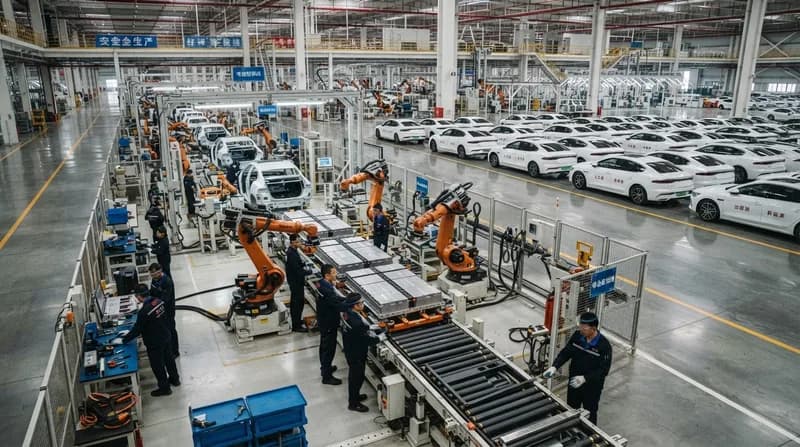
Dr. Shaun Gittens, Director of Machine Learning at MasterPeace Solutions, sees machine learning as a pivotal force in automating processes that were once strictly human-operated. From robotics to chemical and civil engineering, the availability of historical data allows ML to optimize bottom-line performance in ways that were previously inaccessible. However, Gittens points to the critical issue of bias in training data, which threatens to propagate systemic inequities into future technological systems. He argues that addressing bias must be a front-and-center requirement for any engineering project involving automation.
Regarding implementation, Gittens critiques the common mistake of over-engineering solutions by applying complex deep learning techniques to small, simple datasets where more straightforward methods would perform just as well. He also emphasizes the necessity of robust CI/CD (continuous integration/continuous deployment) pipelines for machine learning. Because data, personnel, and infrastructure change over time, Gittens notes that a static model is rarely sufficient. A successful ML strategy requires a reliable, automated infrastructure that facilitates the continuous retraining and seamless replacement of models to keep pace with evolving real-world requirements.
Why It Matters
The insights from these leaders underscore a maturation phase in the machine learning industry. While the early years were defined by proof-of-concept experiments, the current era is defined by operational excellence, the management of systemic biases, and the integration of ML into the backbone of global infrastructure. For organizations, the message is clear: prioritize data health, embrace simplicity, and build for the long-term lifecycle of your models.
Outlook and Implications
The future of machine learning remains incredibly bright as hardware becomes more efficient and miniaturized for edge computing. As power consumption and memory limitations decrease, the ceiling for what can be automated in engineering and commerce will continue to rise. Industry experts agree that the reduction in model-building cycles will soon shorten time-to-market, allowing for faster iteration and a more widespread, accessible application of intelligent systems across every facet of global industry.