Amazon's Transparency Shift
In a significant pivot for the cloud computing industry, Amazon has announced it will abandon the use of Non-Disclosure Agreements (NDAs) during negotiations for new data center deals with local governments. This strategic move follows a similar decision made by Microsoft earlier this year. For years, the inherent secrecy surrounding the placement and power requirements of massive AI infrastructure has been a friction point, fueling public backlash and prompting hundreds of municipal moratoriums from New York to San Francisco.
By lifting the veil on these negotiations, industry giants hope to ease community concerns regarding resource consumption and environmental impact. This shift represents a recognition that as AI hardware becomes a fixture of the modern landscape, the 'black box' approach to infrastructure development is no longer sustainable. Whether this transparency leads to faster approval processes or simply moves the debate into the public square remains to be seen, but the policy change marks a definitive end to the era of quiet, opaque utility deals.
The Rise of Personal AI Hardware: Ghost
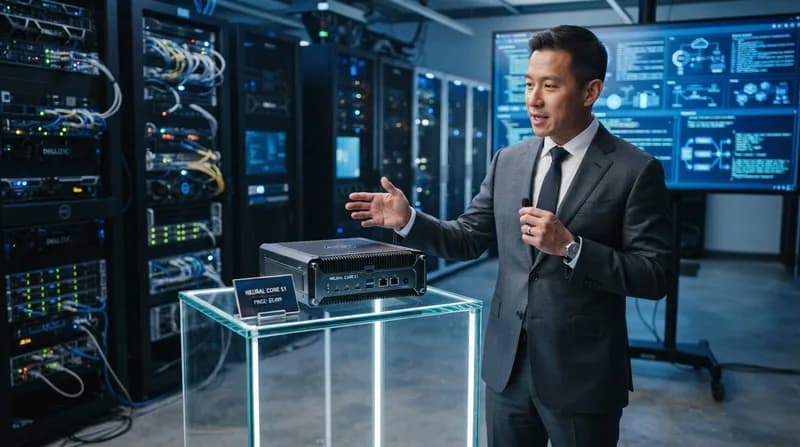
While infrastructure giants navigate policy changes, the consumer-facing side of artificial intelligence is seeing an influx of specialized hardware. A prime example is the newly surfaced $3,499 computer from Ghost, a startup that has already secured $11 million in funding. This device is specifically engineered to handle the demands of personal AI agents that require constant connectivity and processing power, operating around the clock to manage a user's digital life.
The machine is designed to tackle the primary hurdle currently facing AI agents: deep, secure integration into the user's private data. By keeping the processing local and persistent, Ghost aims to provide a dedicated home for agents that need to manage inboxes, file systems, and even financial transactions. However, the premium price tag raises questions about mass-market viability. While tech enthusiasts may welcome a dedicated 'brain' for their digital assistants, convincing the average consumer to invest nearly four thousand dollars into a single-purpose agent machine remains a substantial hurdle for the industry.
The Trust Economy for AI Agents
Beyond the hardware, a burgeoning group of startups—including Tab, Underdog, and Hark—are positioning 'privacy as a product' as they look to facilitate the next generation of AI agents. These companies are betting that users will eventually grant AI software access to their most sensitive information, including credit card credentials and personal communications. The challenge, however, is two-fold: building user trust and circumventing the digital walls currently being erected by major platforms.
Industry titans like Apple, Amazon, and United are increasingly implementing strict security measures that block unauthorized external AI agents from accessing user data or interacting with proprietary systems. As a result, the race to build the ultimate personal agent is becoming as much about cybersecurity and platform diplomacy as it is about advanced language models. The business models that emerge from this tension will likely define the next few years of consumer tech, as startups compete to prove that their agents are not just efficient, but secure enough to be entrusted with the keys to the kingdom.