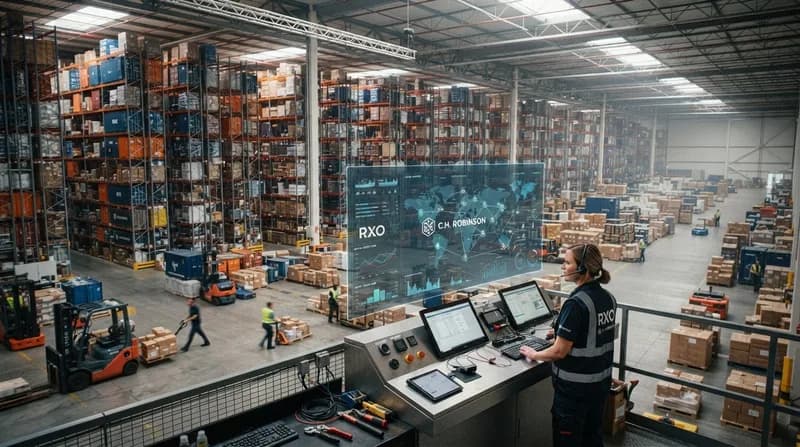
The Strategic Vision for AI in Logistics
In a major consolidation within the freight and logistics industry, C.H. Robinson has announced a definitive agreement to acquire RXO in a deal valued at approximately $5.8 billion. This acquisition is not merely a play for expanded market share; it represents a significant pivot toward integrating advanced artificial intelligence models into the backbone of global shipping and supply chain operations. By combining C.H. Robinson’s vast historical network with RXO’s digital-first infrastructure, the merged entity aims to set a new standard for predictive logistics.
The integration of sophisticated AI is expected to revolutionize how freight is routed, matched, and tracked. The industry has long struggled with volatility and inefficiency, but the infusion of RXO’s proprietary technology into C.H. Robinson’s operational model is designed to automate complex decision-making processes. From real-time route optimization to automated carrier negotiations, the focus is squarely on reducing overhead while increasing the velocity of global goods transport.
Why It Matters
The logistics sector is currently undergoing a radical digital transformation, moving away from legacy manual processes toward data-driven autonomy. This acquisition underscores the growing necessity for firms to adopt a software-first approach to physical movement. Key implications include:
- Operational Efficiency: Enhanced predictive analytics will allow the combined company to anticipate supply chain disruptions before they cascade.
- Automated Market Matching: By utilizing large-scale AI models, the company intends to refine the process of connecting shippers with carriers, significantly reducing 'deadhead' miles where trucks travel empty.
- Competitive Positioning: With a valuation of $5.8 billion, the deal signals that scale is becoming a primary vehicle for achieving the computational power needed to train and maintain proprietary logistics models.
Market Outlook and Integration
As the deal moves toward closure, industry observers are focused on how quickly the two massive networks can merge their distinct technological stacks. While the headline figure is the $5.8 billion price tag, the true value lies in the data synergy. By combining years of freight pricing data with RXO’s modern, cloud-native architecture, the firm is positioning itself to be a leader in a space where speed and information are the most valuable commodities.
The move also reflects a broader trend among major logistics providers: treating logistics software as a product in its own right. Rather than just facilitating physical movement, the company is effectively building a 'freight intelligence' platform that could eventually offer insights-as-a-service to smaller players in the industry. For the global supply chain, this represents a shift toward a more responsive, AI-enabled future where physical hardware and digital models work in tandem.