The End of Closed-Door Negotiations
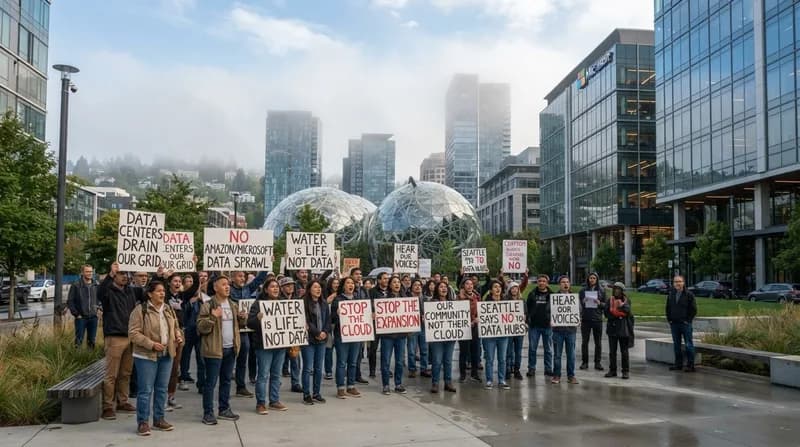
The landscape of artificial intelligence infrastructure is undergoing a significant shift as industry titans, most notably Amazon and Microsoft, announce an end to the use of non-disclosure agreements (NDAs) when negotiating data center construction with local governments. For years, these massive infrastructure projects were shrouded in mystery, with deals often finalized behind closed doors. This lack of transparency has increasingly become a catalyst for intense community backlash, manifesting in hundreds of legislative moratoriums and local pushback from New York to San Francisco.
By opting for transparency, these companies are attempting to quell the growing concerns surrounding the immense power, water, and land requirements of modern AI data centers. The shift suggests that tech giants have recognized that operational secrecy is no longer a sustainable strategy in an environment where communities are increasingly wary of the environmental and socioeconomic footprint of the AI boom.
Why it Matters: Trust as a Competitive Asset
The move toward open negotiation is not purely altruistic; it is a calculated effort to preserve the industry's social license to operate. As the AI sector looks to scale its infrastructure, it faces a mounting "trust deficit." The rapid deployment of data centers has clashed with local interests, and by removing the veil of secrecy, companies are hoping to move from a position of confrontation to one of collaboration.
- Community Engagement: Eliminating NDAs allows for public discourse on zoning, power grid impact, and resource allocation before the first shovel hits the dirt.
- Reducing Regulatory Friction: Transparent deals are inherently more likely to navigate local planning boards without triggering the public outcry that leads to indefinite moratoriums.
- The AI Lifecycle: The physical hardware required to train foundation models is becoming a political lightning rod. Managing the physical footprint is now as vital to an AI company's success as the software itself.
The Broader Context of Personal AI
Parallel to the infrastructure story is a growing wave of startups focusing on "personal AI." These companies are banking on the idea that users will eventually grant AI agents access to their most sensitive personal information, such as private inboxes, bank accounts, and cloud storage files. However, this vision of ubiquitous AI agents is entirely dependent on user trust.
If the industry cannot manage the societal impact of the foundational infrastructure—the "data center problem"—it will likely struggle to win the confidence required to access the personal data of everyday consumers. Whether ditching NDAs will actually bridge this divide remains an open question, but it signifies an acknowledgment that the "black box" era of expansion must give way to a more communicative and accountable approach if the sector is to sustain its current momentum.