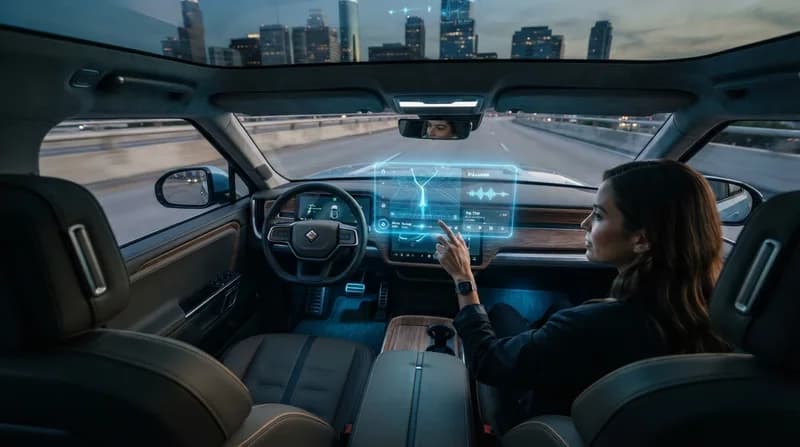
The Evolution of the In-Car Assistant
Rivian is preparing for a major shift in how drivers interact with their vehicles. While the company has already introduced a proprietary voice assistant capable of managing basic cabin functions—such as adjusting climate control, engaging seat heaters, or providing news summaries—CEO RJ Scaringe recently signaled a much larger ambition. At the TechCrunch Disrupt event, Scaringe revealed that Rivian is working to allow its vehicles to host third-party AI agents, potentially opening the door to models from industry leaders like Anthropic or OpenAI.
This move is a continuation of Rivian’s strategy to maintain a vertically integrated software stack. By building its software architecture from the ground up rather than relying on external ecosystems like Apple CarPlay or Android Auto, Rivian has created an "agentic framework" that can route user requests to the appropriate vehicle systems. This intelligent traffic-light system decides whether a query should be processed locally on the vehicle’s hardware or offloaded to the cloud, ensuring speed and reliability for different types of commands.
The "Plumbing" of Agentic Integration
Integrating advanced frontier AI models into a moving vehicle presents unique logistical and safety challenges. Scaringe emphasized that Rivian is currently focused on the complex "plumbing" required to make this vision a reality, which involves deep coordination with AI labs to ensure seamless communication between external models and the vehicle's internal software. This isn't just about software; it is about creating a bridge that allows a vehicle to understand a driver’s broader context, such as personal schedules or previous conversations, while maintaining a clear firewall between comfort features and safety-critical operations.
Crucially, Rivian is taking a cautious approach regarding vehicle autonomy. Scaringe explicitly stated that while AI agents will eventually handle high-level tasks like trip planning or contextual assistance, they will never be granted control over critical safety systems like braking or steering. The goal is to evolve the car into an intelligent companion that can assist with complex tasks—such as menu planning for a dinner party while the driver navigates—by pulling data from other devices and cloud-based conversations.
Why it Matters
- Context-Aware Mobility: By potentially integrating agents like Anthropic’s Claude, cars could move from simple command-response interfaces to proactive assistants that manage a user’s schedule and lifestyle.
- Software Ownership: Rivian’s decision to eschew external platforms like Apple CarPlay in favor of its own, highly customizable software stack gives it the flexibility to implement these advanced AI features on its own terms.
- Safety First: By drawing a hard line between comfort-focused "agentic" features and safety-critical vehicle controls, Rivian is addressing the primary industry concern regarding the reliability of large language models in transport.
- The Future Outlook: With an "AI & Autonomy Day" scheduled for December, the industry expects further clarity on how Rivian plans to bridge the gap between simple voice assistants and full-blown AI agents, setting a new benchmark for software-defined vehicles.