The Shift Toward Hybrid Storage
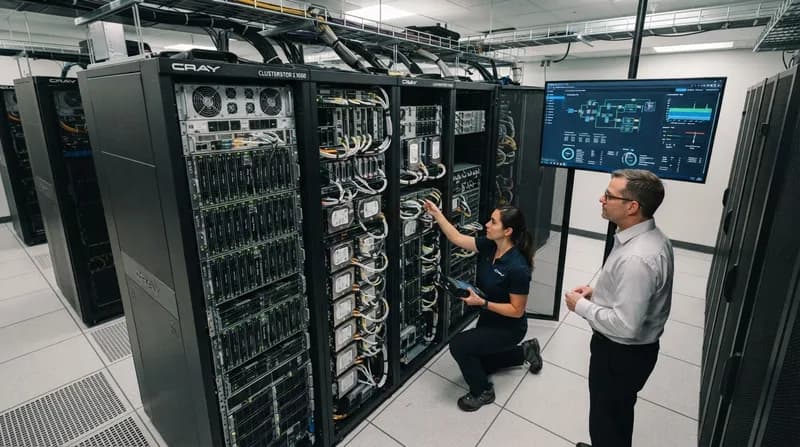
As the demand for AI-driven infrastructure and large-scale simulation workloads accelerates, research institutions and data centers are grappling with the surging prices of high-capacity NAND flash SSDs. In response, Hewlett Packard Enterprise (HPE) is introducing a strategic pivot for its Cray Supercomputing Storage Systems. By blending the high-speed performance of NVMe Gen 5 SSDs with high-capacity 32 TB SAS-4 HDDs, HPE aims to provide a more cost-effective path for organizations to scale their data requirements without sacrificing critical throughput.
The updated E2000 storage line leverages the Lustre parallel file system to maximize efficiency. According to the company, these new hybrid configurations deliver a substantial performance boost, offering up to 41 percent more data throughput per rack compared to previous iterations. With read speeds hitting 116 GB/s and write speeds reaching 92 GB/s per rack, the hardware ensures that research facilities can maintain the high-velocity data access required for modern supercomputing while keeping budget allocations focused on core compute nodes rather than storage overhead.
Intelligent Cooling and Rack Management
Alongside its storage refresh, HPE is prioritizing data center sustainability and longevity with the launch of its new Rack Management Controller. Designed to provide "intelligent liquid cooling," this hardware offers real-time telemetry, advanced leak detection, and automated thermal control. By integrating directly with HPE’s Supercomputing Management Software, the controller creates a closed-loop system that optimizes cooling based on real-time hardware loads.
Why It Matters
- Economic Balance: By integrating SAS-4 HDD technology with SSD building blocks, HPE provides a pragmatic solution to the rising cost of all-flash storage in the AI era.
- Performance Density: The ability to achieve 32 percent more usable capacity per rack helps labs accommodate the growing size of datasets associated with massive AI training and traditional scientific simulations.
- Lifecycle Management: The new Rack Management Controller addresses the increasing thermal demands of high-density computing, protecting expensive silicon investments by automating thermal regulation and early-warning leak detection.
Outlook and Availability
The marketplace can expect the new hybrid E2000 configurations to reach commercial availability in early 2027. The Rack Management Controller will follow a tiered rollout schedule, initially launching for HPE’s own Cray Supercomputing GX5000 infrastructure in March 2027. Following this, HPE plans to expand support for major industry platforms, including Nvidia’s NVL72 and AMD’s Helion and Helios architectures, by June 2027. This phased release strategy underscores HPE’s goal to provide a unified, manageable, and cost-efficient storage backbone across the diverse supercomputing landscape.