Artificial IntelligenceTechnical Deep Dive

Flock Safety Faces Scrutiny Over Discrepancies in Gunshot Detection Capabilities

Published
EElectricBuzz Editorial Team
Flock Safety Faces Scrutiny Over Discrepancies in Gunshot Detection Capabilities
3 min read488 wordsElectricBuzz Editorial Team

The Gist

“During a recent industry appearance, Flock Safety's CEO claimed their audio sensors are limited to gunshot detection, despite marketing materials suggesting a much wider surveillance scope.”

The Public Discrepancy

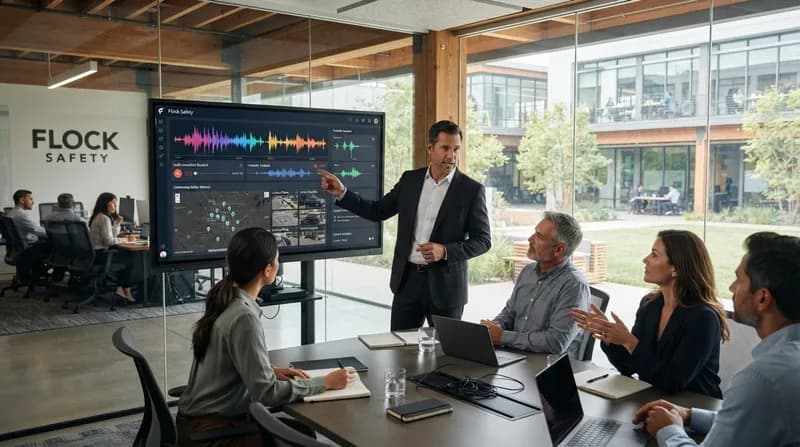
At the recent TechCrunch Disrupt event, Garrett Langley, the CEO of surveillance company Flock Safety, faced pointed questions regarding the actual capabilities of the company’s audio-collection hardware. While the firm has marketed its 'Gunshot Detection' product as a tool for public safety, Langley attempted to frame the technology as a narrow, singular-purpose device. He insisted on stage that the sensors 'detect just gunshots,' aiming to reassure critics who have long been concerned about the potential for mission creep in urban surveillance tech.

However, this assertion stands in direct opposition to the company’s own digital footprint. Flock’s official website highlights that its audio systems are capable of identifying far more than just ballistic events. The promotional copy explicitly mentions the ability to 'detect street takeovers early,' 'identify severe crashes,' and alert authorities to 'fireworks and sideshows.' This discrepancy has fueled ongoing skepticism from privacy advocates who worry that the same infrastructure designed for limited emergency response could easily be adapted for broader, more invasive monitoring.

A History of Feature Flux

The controversy surrounding the product is not entirely new. When the feature was first unveiled, the company suggested that its microphones would listen for 'screaming,' a capability that triggered immediate backlash from privacy organizations. Facing intense criticism, the company softened its language, modifying the descriptor to 'sounds of human distress.' Ultimately, due to continued public pressure and potential liability concerns, the company reportedly pulled the distress-detection feature entirely from its pilot programs.

During the panel, Langley addressed these pivots by characterizing them as evidence that the company is listening to its users and stakeholders. He argued that early prototypes were designed to meet customer requests for broader situational awareness—such as identifying abductions or harm in public spaces—but that those features were curtailed when 'a lot of concerns' arose. He reiterated that, currently, the intent remains focused solely on gunfire, dismissing broader marketing claims as secondary or misunderstood by the public.

Why It Matters

  • Surveillance Overreach: The push-pull between tech firms and privacy advocates highlights the growing tension over how much 'ambient' monitoring is acceptable in public spaces.
  • Market Distrust: The public inconsistency between executive statements and marketing literature can alienate local governments, with states like Florida and Texas already reassessing their partnerships with the firm.
  • Technical Capabilities: As companies like Flock and competitors like ShotSpotter scale their networks to include tens of thousands of sensors, the definition of 'public safety' continues to expand, often faster than policy or public consensus can address.

As the debate continues, the company finds itself at a crossroads. With some municipalities moving to cut ties and high-profile partners like Amazon’s Ring ending their integrations, Flock must now grapple with the challenge of maintaining public trust while clearly defining the boundaries of its surveillance hardware. Whether their audio systems are truly limited to ballistics or remain a broader, adaptable surveillance net remains the central question for policymakers and the communities they serve.


SPONSORED
The 5 Best Over-Ear ANC Headphones of 2026, Tested & Ranked
Editor's Pick Guide
92/100
Tech & Gadgets•12 min read

The 5 Best Over-Ear ANC Headphones of 2026, Tested & Ranked

We locked five over-ear ANC picks for 2026 — Sony WH-1000XM6, Bose QuietComfort Ultra 2, Soundcore Space One, Sennheiser Momentum 5, and Apple AirPods Max 2 — then stress-tested them on lab metrics, long-term owner truth, and live street prices.

Related Stories

Semantically matched articles, ranked by topic overlap and freshness.

PaddlePaddle Joins Forces with Hugging Face Hub
Artificial Intelligence

PaddlePaddle Joins Forces with Hugging Face Hub

The popular deep learning platform PaddlePaddle brings its robust ecosystem and specialized models to the Hugging Face Hub.

Gudea: The 'Storm Tracker' Using AI to Neutralize Digital Crises Before They Explode
Artificial Intelligence

Gudea: The 'Storm Tracker' Using AI to Neutralize Digital Crises Before They Explode

Gudea is moving beyond traditional social listening by using intelligence-grade AI to map the propagation of harmful narratives and misinformation across the web.

Fighting Fire with AI: How Apate Turns the Tables on Scammers
Artificial Intelligence

Fighting Fire with AI: How Apate Turns the Tables on Scammers

Apate.ai is deploying an army of undercover AI agents designed to bait scammers, waste their time, and extract valuable intelligence to protect institutions.

Ricursive Intelligence Aims to Solve the Compute Crisis With AI-Generated Hardware
Artificial Intelligence

Ricursive Intelligence Aims to Solve the Compute Crisis With AI-Generated Hardware

Founders Anna Goldie and Azalia Mirhoseini are scaling chip design through AI, seeking to boost efficiency to meet skyrocketing global compute demands.

AI-Powered Exploit Chains: How Six Days and GPT-5.6 Cracked Chrome
Artificial Intelligence

AI-Powered Exploit Chains: How Six Days and GPT-5.6 Cracked Chrome

Security researchers have demonstrated how AI agents can slash the time needed to uncover complex vulnerability chains, successfully exploiting Chrome in under a week.

When Bots Collide: The Perils of AI-to-AI Job Interviews
Artificial Intelligence

When Bots Collide: The Perils of AI-to-AI Job Interviews

A recent viral experiment pitting an AI job applicant against an automated interviewer reveals the chaotic, often disastrous consequences of automating professional negotiations.

Jamie Dimon on the AI Frontier: Navigating Banking’s Biggest Shift
Artificial Intelligence

Jamie Dimon on the AI Frontier: Navigating Banking’s Biggest Shift

JPMorgan Chase CEO Jamie Dimon weighs in on the dual-edged sword of artificial intelligence as it transforms the financial sector.

Linux Kernel Community Ditches Mandatory AI Disclosure Policies
Artificial Intelligence

Linux Kernel Community Ditches Mandatory AI Disclosure Policies

Linus Torvalds and the Linux kernel maintainers have officially dropped the requirement for developers to disclose the use of AI tools in their code contributions.