Breaking the Hardware Barrier
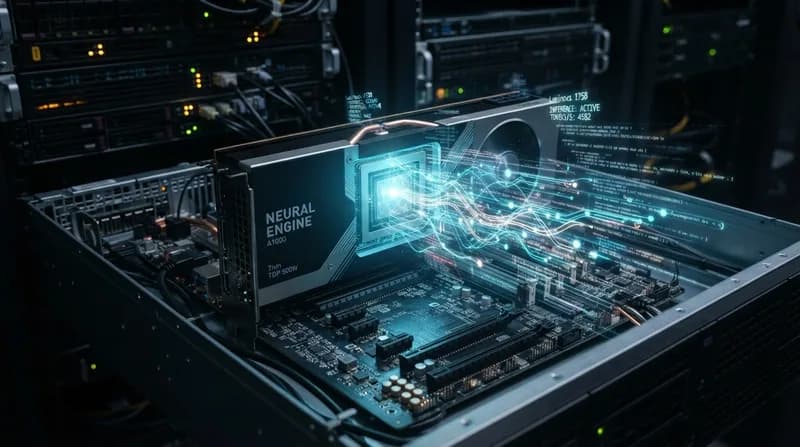
For years, the training and fine-tuning of large language models (LLMs) were restricted to massive server clusters equipped with industrial-grade hardware. The sheer memory footprint required to handle 20 billion parameters typically meant that researchers without enterprise-level resources were locked out of the process. However, recent developments in Reinforcement Learning from Human Feedback (RLHF) and Parameter-Efficient Fine-Tuning (PEFT) have fundamentally shifted this landscape.
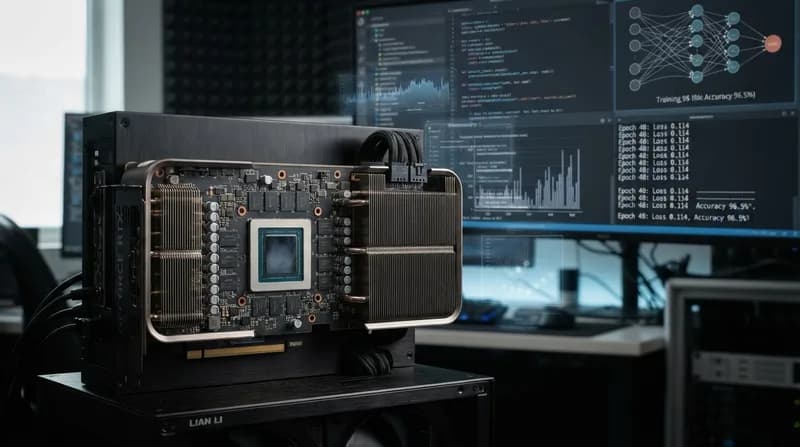
By leveraging sophisticated memory-efficient optimization, developers can now run complex training loops on a single 24GB consumer-grade GPU. This achievement effectively lowers the barrier to entry for independent researchers and smaller labs, enabling them to customize powerful models like EleutherAI’s GPT-NeoX-20B for specific, high-precision tasks without needing to outsource their compute to the cloud.
Why It Matters
- Accessibility: Moves AI development from expensive, centralized data centers to local desktop workstations.
- Customization: Enables domain-specific training on private datasets while maintaining strict data sovereignty.
- Efficiency: Utilizes PEFT to update only a fraction of model weights, drastically reducing the required VRAM and compute overhead.
The ability to deploy RLHF on consumer hardware is a significant milestone for the open-source community. By reducing the reliance on massive hardware clusters, this approach fosters a more diverse ecosystem of AI development. It empowers smaller teams to push the boundaries of model performance, ensuring that advanced AI personalization is no longer a privilege reserved for tech giants with infinite budgets. As these optimization techniques continue to mature, the gap between consumer-grade equipment and professional training environments is narrowing at an unprecedented rate, signaling a new era of decentralized, high-capacity AI exploration.