Scaling the AI Backbone
Crusoe, the infrastructure firm that has become a linchpin in the rapidly expanding artificial intelligence landscape, has successfully closed a $3.9 billion Series F funding round. This milestone pushes the company’s valuation to a staggering $30.9 billion, signaling strong market confidence in its ability to support the heavy compute requirements of modern AI development. The round attracted major institutional backers, including Atreides Management, Mubadala Capital, and Valor Equity Partners, along with significant interest from industry giants like Nvidia and the Qatar Investment Authority.
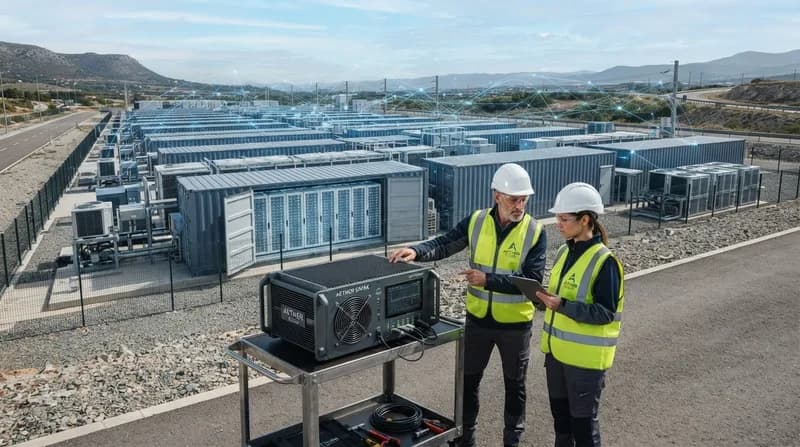
The influx of capital serves as a critical runway for Crusoe to expand its physical footprint. Beyond traditional, large-scale data centers—such as the massive facility currently serving OpenAI in Abilene, Texas—the company is doubling down on a more agile solution to the industry's power and space bottlenecks: the 'Spark' modular data center.
The Spark Strategy: Portability Meets Performance
The Spark project represents a departure from the traditional data center model, which often requires years of site planning, heavy construction, and local regulatory approval. By manufacturing these modular 'AI factories' in-house, Crusoe can effectively containerize high-density compute capacity. These units are designed to be transported by truck, allowing for rapid deployment in proximity to power sources, which is increasingly vital as the demand for inference and training power surges.
This modular approach serves two distinct purposes. First, it allows Crusoe to bypass the extensive construction timelines that typically hinder data center rollouts. Second, it helps mitigate the common community pushback associated with the permanent, sprawling infrastructure of traditional server farms. By creating smaller, flexible nodes, Crusoe aims to scale its network with a level of agility that mirrors the pace of AI software development itself.
Why it Matters
- Vertical Integration: By controlling infrastructure from electricity generation to token output, Crusoe is positioning itself as a full-stack player in the AI ecosystem.
- Strategic Leadership: The appointment of industry heavyweights like Redwood Materials CEO JB Straubel to the board signals a focus on sustainable energy and storage integration for future sites.
- Diversified Revenue: Unlike players focused solely on one aspect of the cloud, Crusoe balances leasing space, renting out its own GPU clusters, and selling compute power for AI inference.
An Evolving Trajectory
Founded in 2018 with a focus on utilizing flared natural gas for crypto mining, Crusoe’s pivot to AI infrastructure has been both decisive and lucrative. The company’s clientele now includes the biggest names in tech, such as Microsoft, Meta, and Oracle. With recent reports suggesting the company is exploring a potential IPO, this massive capital infusion likely serves as the final push to solidify its market position before hitting the public markets. As it stands, Crusoe is not just building boxes for servers; it is engineering the modular future of the global AI supply chain.